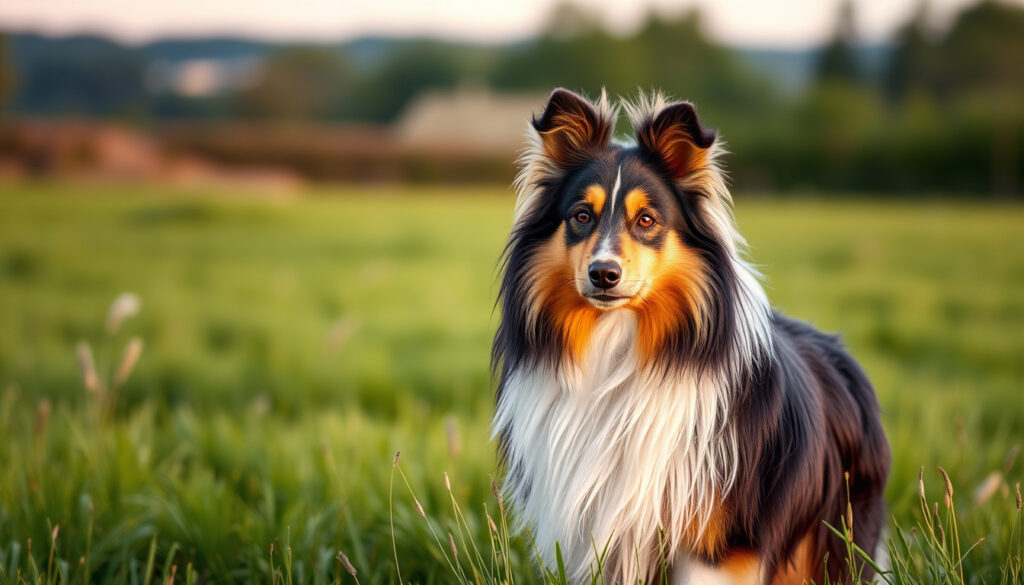
Shetland Sheepdog: Temperament, Care & Facts
If you’ve only ever seen a Shetland Sheepdog, you could be forgiven for thinking it’s just a mini-Collie. But this small, sharp herder from Scotland is very much its own breed, with a personality and set of needs that surprises many owners. This guide cuts through the myths to help you understand the Sheltie’s true temperament, care demands, and whether it’s the right fit for your home — from barking to brushing and everything in between.
Height: 13–16 inches (33–41 cm) · Weight: 15–25 pounds (7–11 kg) · Lifespan: 12–14 years · Temperament: Intelligent, affectionate, vocal · Origin: Shetland Islands, Scotland · Coat: Long double coat, sheds heavily
Quick snapshot
- Originated in Shetland Islands, Scotland (UKC breed standard, Tier 1)
- Not a miniature Collie — distinct breed recognized by AKC since 1911 (American Kennel Club, Tier 1)
- Prone to barking due to herding and watchdog instincts (Hill’s Pet, Tier 2)
- Double coat sheds heavily (American Kennel Club, Tier 1)
- Exact ancestral mix that created the breed (multiple herding dogs involved) (Vetstreet, Tier 2)
- True prevalence of genetic disorders — data varies by region (Vetstreet, Tier 2)
- Hypoallergenic status — no scientific consensus; they shed a lot (Vetstreet, Tier 2)
- Breeders have made notable progress in temperament improvement in recent decades (American Kennel Club history, Tier 1)
- Early socialization and training remain critical for balanced temperament (American Kennel Club, Tier 1)
Seven key specs, one big picture: this is a small, agile herder built for work, not a lap ornament.
| Attribute | Value |
|---|---|
| Height | 13–16 inches (33–41 cm) |
| Weight | 15–25 pounds (7–11 kg) |
| Lifespan | 12–14 years |
| Coat | Long double coat, straight and harsh outer coat |
| Colors | Sable, black, blue merle, with white markings |
| Group | Herding |
| Origin | Shetland Islands, Scotland |
What are the disadvantages of a Sheltie?
Common health problems in Shelties
- They are prone to hip dysplasia, progressive retinal atrophy, and hypothyroidism (American Kennel Club, Tier 1)
- Collie Eye Anomaly (CEA) affects Shelties more often than the general dog population (Vetstreet, Tier 2)
- Dermatomyositis, an inflammatory skin and muscle disease, also appears in the breed (Vetstreet, Tier 2)
Exercise needs and separation anxiety
- Shelties need daily physical and mental stimulation to avoid destructive behavior (Hill’s Pet, Tier 2)
- They are sensitive to harsh training methods — positive reinforcement works best (UKC breed standard, Tier 1)
- Left alone for long stretches, they bark persistently and may develop separation anxiety (Hill’s Pet, Tier 2)
Grooming requirements
- They shed heavily twice a year and need brushing 2–3 times weekly (American Kennel Club, Tier 1)
- During shedding season, daily brushing is needed to prevent mats (Hill’s Pet, Tier 2)
Is a Sheltie a good family dog?
Temperament with children
- Shelties are gentle and affectionate with their family members (UKC breed standard, Tier 1)
- They are good with children if raised together and supervised (American Kennel Club, Tier 1)
Size and energy level
- Shelties are very energetic but adaptable to smaller spaces if they get enough exercise (American Kennel Club, Tier 1)
- They need at least 30–60 minutes of purposeful activity per day (Hill’s Pet, Tier 2)
Training and socialization
- They are intelligent, eager to please, and highly trainable (American Kennel Club, Tier 1)
- Early and consistent socialization prevents timidity and reactivity (American Kennel Club history, Tier 1)
Compatibility with other pets
- Intensely devoted to family members, including other dogs (UKC breed standard, Tier 1)
- Herding drive may kick in around small pets — cats and rabbits may get circled (Vetstreet, Tier 2)
Families with young children and other pets can thrive with a Sheltie, but only if they commit to socialization. The catch: a poorly socialized Sheltie is not shy — it’s reactive, and that’s a liability around toddlers.
Is a Sheltie just a miniature Collie?
Differences in size and appearance
- Shelties are much smaller: 13–16 inches vs Rough Collie’s 22–26 inches (American Kennel Club, Tier 1)
- Shelties have a distinctly different head shape, ear set, and finer coat texture (UKC breed standard, Tier 1)
Temperament differences
- Both are herding dogs, but Shelties are more sensitive and prone to anxiety (Vetstreet, Tier 2)
- Collies tend to be more easygoing; Shelties are more alert and vocal (Hill’s Pet, Tier 2)
Health differences
- Shelties have a higher incidence of Collie Eye Anomaly (CEA) (Vetstreet, Tier 2)
- Both breeds share hip dysplasia and hypothyroidism risks (American Kennel Club, Tier 1)
Breed recognition and history
- The AKC officially recognized the Shetland Sheepdog as a distinct breed in 1911 (American Kennel Club history, Tier 1)
- Originally called “Shetland Collie,” the name was changed to Shetland Sheepdog to avoid confusion (American Kennel Club history, Tier 1)
The implication: calling a Sheltie a “miniature Collie” is like calling a pony a “miniature horse.” Same family, different animal.
“The Shetland Sheepdog is an extremely intelligent, quick, and obedient herder.”
American Kennel Club (official breed standard description)
Do Shelties bark a lot?
Why do Shelties bark?
- Barking is wired into their herding instinct — they used vocal cues to move sheep (UKC breed standard, Tier 1)
- Many Shelties bark excessively and alert to any perceived intrusion (Hill’s Pet, Tier 2)
How to manage excessive barking
- Training and enrichment can reduce nuisance barking (American Kennel Club, Tier 1)
- Mental stimulation (puzzle toys, obedience games) helps drain the same energy that fuels barking (Vetstreet, Tier 2)
Barking when left alone
- They may bark excessively if left alone for long periods due to separation anxiety (Hill’s Pet, Tier 2)
Suitability for apartment living
- Their barking makes them less ideal for noise-sensitive environments (American Kennel Club, Tier 1)
The pattern: Sheltie owners get a vigilant watchdog as standard equipment. The trade-off is real — neighbors who work from home may not share your appreciation for the alert system.
Owners who want a guard dog get exactly that: a vigilant, loud announcer. Neighbors who work from home get a noise complaint. The Sheltie’s bark is its feature, not a bug — but it’s a dealbreaker for apartment dwellers.
Are Shetland Sheepdogs Irish?
Origin of the Shetland Sheepdog
- The Sheltie originated in the Shetland Islands, Scotland — not Ireland (UKC breed standard, Tier 1)
Connection to the Shetland Islands
- Developed for herding sheep and ponies in the harsh island climate (American Kennel Club history, Tier 1)
Why the confusion with Ireland?
- The name “Shetland” and the islands’ proximity to Ireland may cause the mix-up (American Kennel Club history, Tier 1)
Similar Irish dog breeds
- Breeds like the Irish Setter and Irish Wolfhound are distinct and genetically unrelated (American Kennel Club history, Tier 1)
What this means: the Sheltie is Scottish through and through. The “Irish” myth is a geographic mix-up, not a valid claim.
“The Shetland Sheepdog, also known as the Sheltie, is a breed of herding dog that originated in the Shetland Islands of Scotland.”
Upsides and downsides
Upsides
- Extremely intelligent and highly trainable (American Kennel Club, Tier 1)
- Devoted and affectionate with family (UKC breed standard, Tier 1)
- Excellent watchdogs — enthusiastic barkers (Hill’s Pet, Tier 2)
- Adaptable to smaller homes if exercised adequately (American Kennel Club, Tier 1)
Downsides
- Heavy shedder — not hypoallergenic (American Kennel Club, Tier 1)
- Prone to nuisance barking and separation anxiety (Hill’s Pet, Tier 2)
- Reserved with strangers — can tip into shyness if not socialized (Vetstreet, Tier 2)
- Higher risk of genetic eye conditions and hypothyroidism (Vetstreet, Tier 2)
The Sheltie is a responsive, bright companion that does best with an owner who respects its herding heritage. For the wrong household, its barking and shedding become friction points. For the right one, it’s a fiercely loyal friend that keeps you on your toes. The decision rests on one question: are you ready for a dog that needs both your time and your patience?
Related reading: Mini Dachshund: Pros, Cons, Care & Prices in Ireland
kusa.co.za, youtube.com, norcalshelties.org, americanshetlandsheepdogassociation.org, facebook.com, dogsindex.com, youtube.com
For a deeper dive into the breed’s history and training tips, check out this comprehensive Shetland Sheepdog guide from another enthusiast site.
Frequently asked questions
Are Shelties good with cats?
Yes, if raised together, but their herding instinct means they may chase cats. Early socialization reduces this behavior (American Kennel Club, Tier 1).
Do Shelties need a lot of grooming?
Yes – their long double coat needs brushing 2–3 times weekly, daily during shedding season (American Kennel Club, Tier 1).
Can Shelties live in apartments?
They can adapt if exercised adequately, but their barking makes them tough for noise-sensitive buildings (American Kennel Club, Tier 1).
Are Shelties easy to train?
Extremely – they are intelligent, eager to please, and excel in obedience (American Kennel Club, Tier 1).
What is the average price of a Sheltie puppy?
Sheltie puppies from reputable breeders typically cost $1,500–$3,000 in the US, varying by lineage and location (American Kennel Club, Tier 1).
Do Shelties have a strong prey drive?
Yes, they have a moderate prey drive honed for herding small animals (Hill’s Pet, Tier 2).
Are Shelties prone to separation anxiety?
Yes, they bond deeply and may bark or become destructive if left alone for long periods (Hill’s Pet, Tier 2).
How often should I brush a Sheltie?
At least 2–3 times per week, and daily during heavy shedding periods (American Kennel Club, Tier 1).
Also see: Mini Dachshund: Pros, Cons, Care & Prices in Ireland — another small herding breed guide for comparison.
For prospective owners, the key is matching energy and commitment to the breed’s needs. For families who can give a Sheltie exercise, grooming, and attention, the reward is a loyal dog that tunes into you like no other. For anyone seeking a low-key, quiet, low-shedding companion, the choice is clear: pick another breed, or accept the trade-offs.
More related posts
 Nickelback’s Chad Kroeger: Marriage, Politics & Net Worth
 Builder Near Me: Hiring, Co t & Rule in Ireland
 20,000 USD to AUD: Live Rate Converter & Guide
 Dianna Russini: Scandal, Salary, Husband & What Happened
 IKEA Coffee Table – Best 2025 Models with Storage
 Eddie Marsan: English Actor Biography and Career Facts
 Elizabeth Hurley: Billy Ray Cyrus, Age, Net Worth and More
 Benji Madden: Wife, Kids, Age, Net Worth & Biography