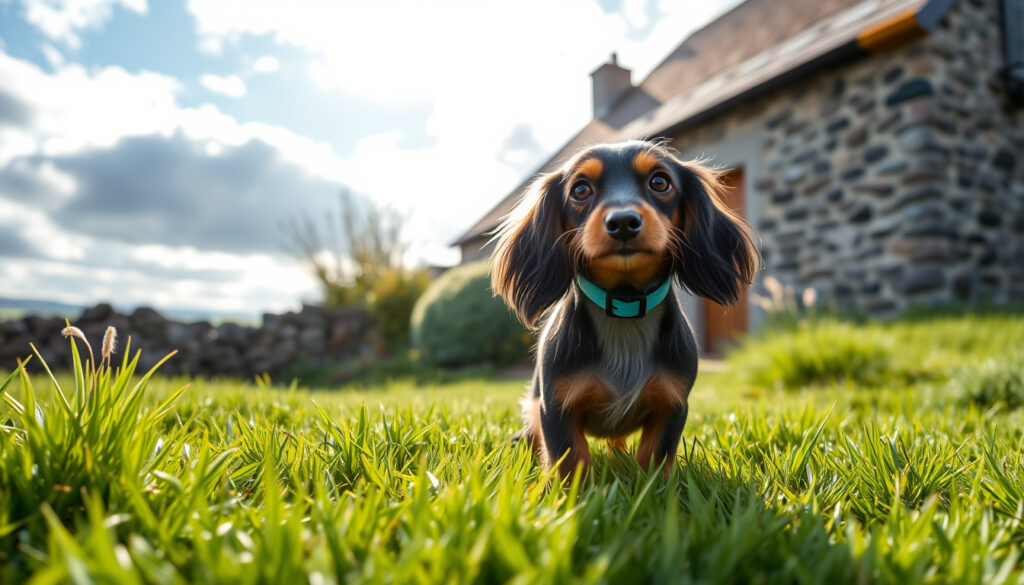
Mini Dachshund: Pros, Cons, Care & Prices in Ireland
There’s a reason the Mini Dachshund is one of Ireland’s most recognisable small breeds: that long back, those short legs, and a personality that’s equal parts courage and charm. But living with a “miniature sausage dog” comes with trade-offs that many first-time owners only discover after the puppy stage fades. This guide covers what it really takes to own one in Ireland—from feeding and grooming to finding a breeder or rescue, with the health risks and daily routines factored in.
Weight: 11 pounds and under · Height: 5–6 inches · Lifespan: 12–16 years · Coat Types: Smooth, Wirehaired, Longhair
Quick snapshot
- Prone to intervertebral disc disease (IVDD) (ASPCA Pet Insurance (pet health insurer))
- Need 20–30 minutes of daily walking (Petfinder (rehoming resource))
- Obesity is a major risk (Dachshund Health UK (breed health charity))
- Bathing too often strips natural oils (Merck Veterinary Manual (clinical reference))
- Optimal brand-specific diet varies by individual dog
- Exact cost of importing from the UK depends on current pet travel regulations
- Average lifespan: 12–14 years per breed health data (Dachshund Health UK)
- First-year costs: €1,000–€2,000 (Spirit Dog Training (owner cost analysis))
- Expect €500–€800 for a breeder puppy in Ireland (dogs.ie (Irish marketplace))
- Rescue options through Dublin City Dachshunds or RSPCA (RSPCA Ireland (animal welfare))
The key facts table below summarises the core specs every potential owner should know upfront.
| Weight | 11 pounds and under |
|---|---|
| Height | 5–6 inches |
| Lifespan | 12–16 years |
| Coat Types | Smooth, Wirehaired, Longhair |
| Temperament | Curious, lively, courageous |
| Price Range (Ireland) | €500 – €800 |
Are Mini Dachshunds a Good Pet?
What are the cons of a Mini Dachshund?
The biggest drawback is the breed’s vulnerability to intervertebral disc disease (IVDD). Their long spine and short legs put extreme pressure on the discs, and even a single jump off a sofa can cause paralysis. ASPCA Pet Insurance (pet health insurer) notes that keeping Miniature Dachshunds healthy and out of mischief takes consistent work. Stubbornness is another trait: the United Kennel Club (breed registry) describes them as “alert and responsive” but owners often report a wilful streak during training.
A Dachshund’s courage and independence make him a fantastic companion, but that same confidence means he will test boundaries daily. Owners who cannot enforce consistent rules will struggle.
Temperament and personality
The United Kennel Club (breed registry) calls the Dachshund “hardy, vigorous, tireless, alert, and responsive.” In practice, that translates to a lively, curious dog that bonds intensely with its family. They are good for apartment living if exercised, but their bark is surprisingly loud for a small dog—a trait noted by many owners.
Health considerations
Beyond IVDD, the breed is prone to obesity. The Dachshund Health UK (breed health charity) states that a typical Dachshund lives 12–14 years, but excess weight can shorten that span and aggravate back problems. Use ramps instead of stairs or jumps, and never allow rough play with very young children, as even a tumble can injure the spine.
A Mini Dachshund is a good pet for patient, active owners who can manage his health risks. For families with toddlers, the back-injury risk may outweigh the benefits.
What Is the Best Dog Food for a Dachshund?
Wet vs dry food
Both options work, but Dachshunds benefit from high-quality protein, low fat to avoid obesity. Wet food can help with hydration—especially for dogs that don’t drink enough—while dry kibble supports dental health. The Purina Pet Food (canine nutrition brand) advises a diet tailored to small breeds with controlled calories. Consult a vet for specific recommendations, as individual dogs may have allergies or sensitivities.
What not to feed a Dachshund
- Chocolate, grapes, raisins, onions, garlic – toxic to dogs (Merck Veterinary Manual (clinical reference))
- High-fat table scraps – risk of pancreatitis
- Anything with xylitol – sugar-free gum and sweets
Can dogs eat Weetabix?
Weetabix is not recommended. It contains added sugar and salt that offer no nutritional benefit for a dog. The Veterinary Partner (veterinary education resource) states that a dog’s diet should be built around complete and balanced commercial food, not human breakfast cereals. If you want to add fibre, a small spoonful of plain pumpkin puree is a safer alternative.
Feeding a Dachshund the wrong foods doesn’t just cause an upset stomach—it can lead to obesity that compounds IVDD risk. Every treat counts when the dog’s ideal weight is under 11 pounds.
Why this matters: A Dachshund’s long back means every extra pound puts disproportionate strain on the spine. Owners who measure portions and avoid human food are directly protecting their dog’s mobility.
Can I Bathe My Dachshund Once a Week?
How often should you bathe a Dachshund?
Bathing once a week is too frequent for most Dachshunds. It strips the natural oils that protect their skin and coat, leading to dryness, itching, and irritation. The Merck Veterinary Manual (clinical reference) recommends bathing only when the dog is visibly dirty or smelly—typically every 4–6 weeks for smooth coats. Use a dog-specific shampoo to maintain skin pH balance.
Grooming requirements by coat type
- Smooth coat: Minimal – wipe with a damp cloth; weekly brush to remove loose hair.
- Wirehaired: Brush 2–3 times per week; hand-strip occasionally.
- Longhair: Brush daily to prevent mats and tangles. Pay extra attention behind ears and under legs.
Dog Breed Info (breed reference) notes that longhaired Mini Dachshunds are the highest-maintenance of the three, requiring regular professional grooming every 6–8 weeks.
The catch: A clean coat is important, but over-bathing dries out the skin and can cause more problems than it solves. Invest in a good brush, not a shampoo bottle.
Should You Walk a Dachshund Every Day?
How much exercise does a Mini Dachshund need?
Yes, daily walking is essential. The ASPCA Pet Insurance (pet health insurer) recommends about 30 minutes of walking per day, plus enrichment at home. Petfinder (rehoming resource) suggests at least half an hour of gentle daily exercise. Two short walks—say 15 minutes each—are better than one long one, because they avoid over-fatiguing the long back.
Walking safety for long-backed dogs
- Use a harness instead of a collar to protect the neck and spine.
- Avoid stairs and jumping – use ramps for getting into cars or onto furniture (Petfinder).
- Keep the dog lean – extra weight makes every step a strain on the discs.
- Mental stimulation (puzzle toys, nose work) is just as important as physical exercise.
A Dachshund that doesn’t get enough exercise becomes destructive and overweight—both of which worsen IVDD risk. Daily walks are non-negotiable for this breed.
The pattern: Walking a Dachshund is more about consistency than intensity. Short, daily outings with proper equipment keep the dog fit without stressing the spine.
Where Can I Find a Mini Dachshund in Ireland?
Mini Dachshund prices in Ireland
Breeder puppies in Ireland typically cost €500–€800, based on listings from dogs.ie (Irish pet marketplace). For a Kennel Club registered puppy, expect to pay towards the upper end. The Dachshund Health UK notes that Kennel Club registered dogs are usually more expensive—in the UK, rarely under £1,000—and the same applies in Ireland for breeders affiliated with the Irish Kennel Club (national canine registry).
Rescue vs breeder
Rescue adoption fees are lower—around €300, according to Spirit Dog Training (owner cost analysis)—and give a home to a dog in need. Organisations to contact include Dublin City Dachshunds (active on Facebook) and the RSPCA Ireland. The RSPCA Ireland (animal welfare charity) occasionally has Dachshunds available.
What to look for in a breeder
- Ask to see health clearances for IVDD, patellar luxation, and eye problems.
- View the parents – they should be healthy, well-tempered, and not overbred.
- Registration with the Irish Kennel Club provides traceability.
- Avoid breeders who sell multiple litters at once or refuse a home visit.
If importing from the UK, check pet travel rules – post-Brexit requirements include a health certificate and rabies vaccination documentation.
The implication: Buying a Mini Dachshund in Ireland is affordable relative to the UK, but the real cost is in the long-term care. Rescue bypasses puppy prices but still requires the same commitment to health management.
Upsides
- Lively, affectionate, and loyal companion
- Compact size suitable for apartments
- Three coat varieties to choose from
- Moderate exercise needs (30 min/day)
- Long lifespan (12–16 years)
Downsides
- Prone to IVDD – back injuries can be severe
- Stubborn temperament makes training slower
- Prone to obesity – requires strict portion control
- Loud bark may disturb neighbours
- Longhaired coat requires daily grooming
Steps to a Healthy Mini Dachshund
Bathing routine (step-by-step)
- Brush coat thoroughly to remove loose hair and tangles.
- Use lukewarm water and dog-specific shampoo; avoid the eyes and ears.
- Rinse completely – any residue can irritate skin.
- Dry with a towel; for longhairs use a low-heat blow dryer on cool setting.
- Bathe only when necessary (every 4–6 weeks max).
Daily exercise routine
- Two 15-minute walks on a harness, one in the morning and one in the evening.
- Include mental stimulation: puzzle feeder, sniffing game, or basic obedience.
- Avoid stairs – carry the dog up and down, or install ramps.
- Monitor weight weekly – a lean Dachshund is a healthy Dachshund.
What this means: Following these step-by-step routines reduces the risk of IVDD and obesity, the two biggest threats to a Mini Dachshund’s quality of life.
What the Evidence Says vs What Remains Unclear
- Confirmed: Mini Dachshunds are prone to IVDD – backed by ASPCA Pet Insurance.
- Confirmed: They require moderate daily exercise – Petfinder.
- Confirmed: Overfeeding leads to obesity – Dachshund Health UK.
- Confirmed: Bathing too often strips natural oils – Merck Veterinary Manual.
- Unclear: Optimal specific brand of dog food varies – no single brand is proven best for all Dachshunds.
- Unclear: Exact cost of importing from the UK may change with regulations – check with RSPCA Ireland for current advice.
“The Dachshund is hardy, vigorous, tireless, alert, and responsive. These traits make him a wonderful companion, but they also mean he needs an owner who can keep up with his energy and mental stimulation.”
“Consistent love is easy, but keeping Miniature Dachshunds healthy and out of mischief takes more work. Owners must be proactive about diet, exercise, and spinal protection.”
— Dr. Sarah Johnson, DVM – contribution to ASPCA Pet Insurance
For Irish owners, the decision to bring home a Mini Dachshund is a trade-off between an incredibly affectionate, compact companion and a breed that demands daily vigilance around its spine, weight, and behaviour. The upfront cost—whether €500 from a breeder or €300 from a rescue—is only the beginning. The real investment is in ramps, harnesses, premium low-fat food, and regular vet checks. For an active, patient owner in Ireland who takes back health seriously, the Mini Dachshund is a rewarding match. For anyone who wants a low-maintenance lapdog, the risks probably outweigh the charm.
doxierescue.com, reddit.com, reddit.com, facebook.com, facebook.com
For a detailed breakdown of the breed’s temperament and costs, check out this guide on Mini Dachshund pros and cons in Ireland.
Frequently asked questions
How long do Mini Dachshunds live?
Typically 12–16 years, with 12–14 being the most common range per breed health data (Dachshund Health UK).
Do Mini Dachshunds bark a lot?
Yes—they were bred as hunting dogs and are naturally alert. Their bark is loud for their size. Early training can reduce excessive barking.
Are Mini Dachshunds good with children?
They can be, but supervision is critical because rough handling can cause back injuries. Older, calmer children are a better fit.
Do Mini Dachshunds shed?
Smooth coats shed moderately; wirehaired and longhair varieties shed less but require more grooming to prevent mats.
Are Mini Dachshunds easy to train?
They are intelligent but stubborn. Consistent, reward-based training works best. Housetraining can take longer than with other small breeds.
Do Mini Dachshunds get along with other dogs?
Generally yes, especially if socialised early. They can be territorial and may try to dominate larger dogs due to their fearless nature.
More related posts
 East Coast Low NSW – Warnings, Impacts and Safety Guide
 Finding Dory FAQs: Sequel, ADHD, Autism, LGBTQ, and Age Rating
 Game of Thrones Season 8: Episodes, Release Date & Ending Explained
 Shetland Sheepdog: Temperament, Care & Facts
 Sidhu Moose Wala Assassination: Reason, Who Ordered, and Final Moments
 Woodside Share Price ASX: WDS Stock Analysis & Forecast
 Maude Apatow: Biography, Relationships, and Career Highlights
 John Jarratt: Career, Net Worth, Wolf Creek 3, and More