Mount Kilimanjaro: Difficulty, Deaths, Oxygen & Beginner Guide
If you’ve ever wondered whether a relatively fit person with no mountaineering experience can stand on the roof of Africa, the short answer is yes — but the climb is a different kind of beast. Mount Kilimanjaro isn’t technical, yet each year altitude sickness sends dozens of climbers back down and contributes to an estimated 3 to 10 deaths annually.
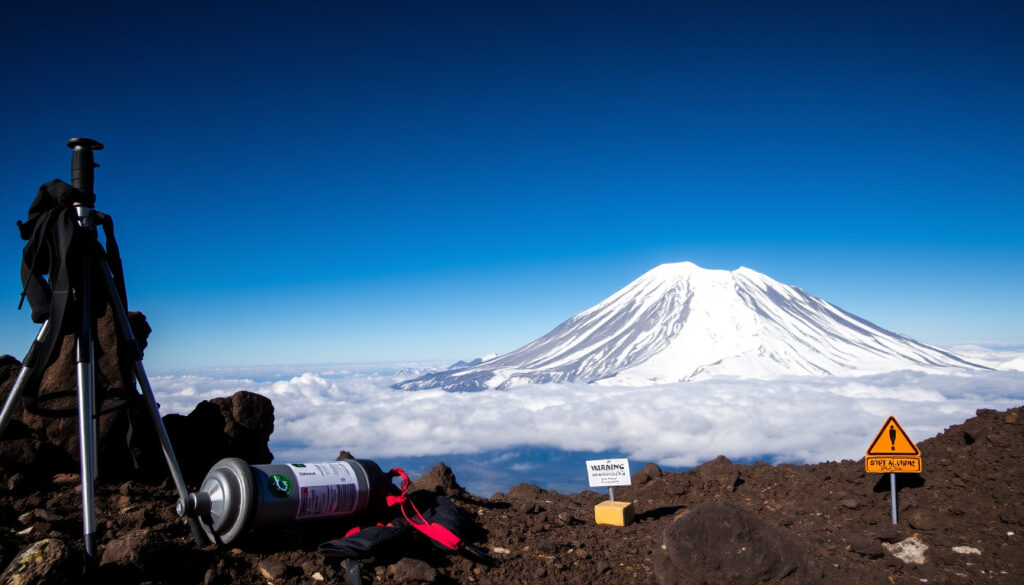
Height: 5,895 m (19,341 ft) ·
Country: Tanzania ·
First Ascent: 1889 by Hans Meyer and Ludwig Purtscheller ·
Summit Success Rate: Approximately 65% on longer routes ·
Average Climbing Duration: 6 to 9 days ·
Annual Fatalities: 3 to 10 climbers per year
Quick snapshot
- Height: 5,895 m (19,341 ft) – confirmed by Kilimanjaro National Park (official park site)
- First ascent in 1889 by Hans Meyer and Ludwig Purtscheller (Kilimanjaro National Park (official park site))
- Must be accompanied by a licensed guide since 2006 (Kilimanjaro National Park (official park site))
- Summit success rate varies from 55% (5-day routes) to ~85% (8-day routes) (Kilimanjaro National Park (official park site))
- Exact annual death toll not officially published; estimates range from 3 to 10
- No centralized database for cause of death on the mountain
- Success rates by age and gender are not comprehensively tracked
- 1889 – First successful ascent
- 1973 – Kilimanjaro National Park established
- 2006 – Licensed guides become mandatory
- Record climber numbers – over 50,000 attempts in 2021
- Growing calls for better accident reporting from park authorities
- Longer, better-acclimatized itineraries becoming the new standard
Key facts at a glance
| Height | 5,895 m (19,341 ft) |
| Location | Tanzania, East Africa |
| First Ascent | 1889 by Hans Meyer and Ludwig Purtscheller |
| Number of Climbers per Year | Approximately 35,000 |
| Success Rate (8-day routes) | ~85% |
| Success Rate (5-day routes) | ~55% |
| Fatalities per Year | 3–10 (estimated) |
How many climbers died on Kilimanjaro?
Exact figures are hard to pin down because Tanzania’s Kilimanjaro National Park does not publish a centralized death registry. Based on multiple secondary sources, the annual death toll is between 3 and 10 climbers per year, including support staff and porters. That gives a fatality rate of roughly 0.1% of all climbers — about one per thousand.
What are the main causes of death on Kilimanjaro?
- Altitude illness – Acute Mountain Sickness (AMS), High Altitude Pulmonary Edema (HAPE), and High Altitude Cerebral Edema (HACE) are the leading causes. According to Follow Alice (trekking operator with safety focus), severe altitude sickness can develop into life-threatening conditions.
- Falls and accidents – especially on scree slopes and near the summit.
- Hypothermia and dehydration – temperature swings from 30°C at the base to -20°C at the summit catch unprepared climbers.
What is the fatality rate on Kilimanjaro?
Industry estimates place the risk at 0.1% – about one death per 1,000 climbers. A report by African Mecca Safaris (Tanzanian tour operator) notes that roughly one person in every thousand dies on the mountain, including support staff. However, that figure may undercount because many deaths go unreported.
Can a beginner climb Kilimanjaro?
Yes — thousands of first-time trekkers summit every year. Kilimanjaro is a multi-day hike, not a technical climb; no ropes, crampons, or ice axes are required. The challenge is purely physical endurance and altitude management. Wikipedia’s Mount Kilimanjaro page notes the mountain is often promoted as a trek rather than a climb, but altitude makes it challenging for beginners.
What physical fitness is required?
Moderate cardiovascular fitness (able to walk 6–7 hours uphill with a daypack) is sufficient. You don’t need to be an ultramarathon runner, but you should be comfortable walking for consecutive days on uneven terrain.
Do I need previous climbing experience?
No. There are sections of steep, rocky trail, but nothing that requires technical skills. Guided tours (mandatory since 2006) handle navigation, pacing, and emergency protocols.
What is the recommended route for beginners?
Longer routes equal better acclimatization. The Lemosho (8 days) and Machame (7 days) routes boast success rates of 80-85%, compared to 55% on the shorter Marangu (5 days).
Upsides
- No previous climbing experience needed
- Beginner-friendly when choosing 8-day itinerary
- Guided tours provide safety net and structure
Downsides
- Altitude can stop even fit beginners
- Physical endurance underestimated by many
- Cost of guided tours ($2,000–$8,000) can be a barrier
Beginners who invest in an 8-day itinerary and respect altitude warnings succeed at roughly the same rate as experienced climbers. The mountain doesn’t care about your climbing resume — only your body’s ability to adapt to thin air.
What is harder, Everest or Kilimanjaro?
Comparing Kili to Everest is like comparing a long uphill walk to an arctic warfare mission. Everest Base Camp trekkers often find Kilimanjaro harder due to the rapid ascent, but the summit of Everest (8,848 m) is in a completely different league of danger and technical skill.
How do the altitudes compare?
Kilimanjaro’s summit is 5,895 m; Everest’s is 8,848 m. Available oxygen at the summit of Kili is about 50% of sea level; on Everest it’s a third of that. Eco-Africa Climbing (local guide operator) states that at the summit of Kilimanjaro, available oxygen is about half of sea level.
How does the technical difficulty differ?
Kilimanjaro is a walk-up (Grade 1 scramble in places); Everest requires ice climbing on the Hillary Step, use of fixed ropes, and crampon skills on 50-degree slopes. Success rate on Kili (65-85%) is far higher than Everest (around 50%), according to Wikipedia’s comparison data.
Which mountain has a higher success rate?
Kilimanjaro’s success rate for properly acclimatized climbers (8-day route) is about 85%. Everest’s summit success rate hovers around 50% for commercial expeditions. Kilimanjaro National Park does not track exact numbers, but mountaineering literature consistently reports this gap.
Three differences, one pattern: Kilimanjaro is altitude-first, Everest is altitude-plus-technique. Two very different beasts.
The comparison table below lays out the key contrasts between these two iconic peaks.
| Factor | Mount Kilimanjaro | Mount Everest |
|---|---|---|
| Summit elevation | 5,895 m | 8,848 m |
| Technical difficulty | None (trekking) | Extreme (ice, rock, fixed ropes) |
| Oxygen at summit | ~50% of sea level | ~33% of sea level |
| Typical success rate | 65–85% | ~50% |
| Preparation needed | Weeks to months | Months to years |
| Annual deaths | 3–10 estimated | ~5 (2023) |
The pattern is clear: Kilimanjaro tests your lungs, Everest tests your entire skill set.
Do you need oxygen to climb Kilimanjaro?
No. Supplemental oxygen is not required on Kilimanjaro. The summit sits at 5,895 m – well within the range that healthy, acclimatized humans can reach without bottled oxygen. In fact, Follow Alice’s comprehensive altitude guide warns that oxygen use can mask altitude sickness symptoms and interfere with acclimatization if used inappropriately.
At what altitude does oxygen become necessary?
For most people, supplemental oxygen becomes helpful above 7,000 m (the “death zone”). Kilimanjaro never gets there. At around 3,600 m, climbers get roughly 40% fewer oxygen molecules per breath compared to sea level. The key is acclimatization — not a tank.
What are the effects of altitude on Kilimanjaro?
- Headache, nausea, dizziness, fatigue – classic AMS symptoms.
- Severe cases can progress to HACE or HAPE, which require immediate descent.
- Emergency oxygen is carried by guides for medical emergencies only.
Can I use supplemental oxygen on Kilimanjaro?
Yes, but it is not considered standard practice. Some commercial operators offer “oxygen supplement” devices (like portable concentrators), but African Mecca Safaris (Tanzanian guide operator) and others caution that relying on oxygen can give a false sense of safety and delay recognition of altitude sickness.
How difficult is the Mount Kilimanjaro climb?
Moderate – but often underestimated. Kilimanjaro’s difficulty comes not from technical sections but from the sustained altitude, long hiking days, and extreme temperature swings. Kilimanjaro Park Tanzania (tour operator blog) describes it as a non-technical trek where altitude makes it challenging for beginners.
What makes Kilimanjaro challenging?
- Altitude: The main obstacle. Success requires a slow, “pole pole” (slowly) pace.
- Duration: 6–9 days of 6–7 hour hiking days with a heavy pack.
- Temperature: From tropical heat at the base to -20°C at the summit.
- Terrain: Uneven, rocky, sometimes sandy – no “walk in the park.”
What is the daily hiking schedule?
A typical day starts at 6–7 am, hiking 4–5 hours before lunch, then 2–3 more hours in the afternoon. Elevation gain is 500–1,000 m per day, with rest days for acclimatization on longer routes.
How does temperature affect the climb?
You’ll strip to shorts and a T-shirt at the rainforest zone (1,800 m) and add 5–6 layers near the summit. The dramatic drop from 30°C to -20°C between afternoon sun and midnight summit push catches many off-guard.
Steps to prepare for a successful climb
- Choose a longer route – Aim for 8–9 days (Lemosho or Northern Circuit).
- Train your hiking legs – 3–4 months of hill walking or stair climbing, building up to 6–7 hour days.
- Invest in proper gear – Good boots, a warm sleeping bag (-15°C rated), and a hydration system.
- Book with a reputable operator – Check that they supply emergency oxygen and well-trained guides.
- Listen to your body – If headache persists or balance fails, go down. The mountain will still be there.
The implication: preparation is not optional — it’s the difference between a summit photo and a rescue descent.
The single biggest predictor of success is not fitness – it is route length. Every extra day of acclimatization cuts your risk of altitude sickness by roughly half. For the beginner, the trade-off is clear: spend more days on the mountain for a far higher chance of standing on the summit.
Clarity check: what we know and what remains unclear
Confirmed facts
- Height is 5,895 m (19,341 ft) above sea level – confirmed by Kilimanjaro National Park.
- Located in Tanzania, near the border with Kenya.
- First ascent was in 1889.
- Climbers must be accompanied by a licensed guide.
- Summit success rate varies from 55% to 85% depending on route length.
What remains unclear
- Exact number of fatalities each year is not officially published; estimates vary.
- Cause of death often not publicly recorded in centralized database.
- Success rates by age and gender are not comprehensively tracked.
- Effectiveness of different acclimatization protocols is debated.
Perspectives on Kilimanjaro
“[Kilimanjaro is] an enormous, continent-topping high that even ordinary hikers can reach once steeled to the task.”
“Kilimanjaro’s altitude makes acute mountain sickness a serious risk even though the mountain is not technically demanding like many alpine peaks.”
“If you want the best chance of success, book an 8- or 9-day itinerary. Anything shorter is a lottery.”
Kilimanjaro is the world’s most accessible high peak – but accessibility is not the same as easy. The real risk is altitude, not technical failure. For the beginner, the decision is clear: choose an 8-day route or accept a success rate that drops below 60%. For the fitness-obsessed who think they can “power through,” the mountain has a bleak lesson – you can’t outrun thin air. Choose slow, choose long, and you’ll likely stand on the roof of Africa. Rush, and you might join the grim statistics.
Related reading: Matterhorn Mountain: Climbing Difficulty and Fatalities
climbing-kilimanjaro.com, thinkglobalschool.org, fairvoyage.com, facebook.com, discoverafrica.com
For a deeper look at difficulty, deaths, and oxygen needs, this guide offers expert advice on tackling the summit safely.
Frequently asked questions
What is the best route for a beginner climbing Kilimanjaro?
The Lemosho Route (8 days) is widely considered best for beginners because it offers excellent acclimatization and gentle gradients. The Machame Route (7 days) is also good but slightly harder. Avoid the Marangu Route (5 days) if you want a high success rate.
How much does it cost to climb Kilimanjaro?
Group tours range from $2,000 to $5,000 per person; private tours cost $4,000 to $8,000. This includes park fees, guides, porters, and meals. Excluded: flights, gear, tips, and travel insurance.
What gear do I need to climb Kilimanjaro?
Essential items: sturdy hiking boots, a warm sleeping bag rated to -15°C, waterproof jacket and pants, layered clothing (base, mid, shell), headlamp, trekking poles, hydration system, and sun protection. Renting gear in Moshi is common.
Is altitude sickness common on Kilimanjaro?
Very common. About 60–80% of climbers experience some form of AMS (headache, nausea). Severe cases (HACE, HAPE) affect roughly 1–2%. Proper acclimatization reduces risk.
Can I climb Kilimanjaro solo?
No. Since 2006, Tanzania requires all climbers to be accompanied by a licensed guide. Solo climbing without a guide is not permitted within the national park.
What is the climate like at different elevations?
At the base (800 m): tropical rainforest, 30°C. Mid-slope (3,000 m): moorland, 15–20°C. Summit zone (5,000+ m): arctic, down to -20°C with strong winds. The temperature drop is extreme.
When is the climbing season on Kilimanjaro?
The best seasons are January–March and June–October. The short rains (April–May) and long rains (November) make trails muddy and summit views less reliable.
Do I need travel insurance for Kilimanjaro?
Yes, strongly recommended. Your policy must cover helicopter evacuation and high-altitude trekking (above 4,500 m). Standard travel insurance often excludes Kilimanjaro.
More related posts
 JBL Charge 5 Review: Is It Still Worth Buying in 2025
 FBC Blood Test: What It Shows and Normal Ranges
 Bianca Censori Grammys Dress: What Happened, Was It Illegal?
 Taryn Manning: Biography, Career, and Sobriety Journey
 Israel Adesanya: Record, Next Fight & Latest Career News
 The Naked Gun – Movies in Order, Cast and Reboot Guide
 Woolworths Insurance Login: My Insurance Portal Guide
 Target Mt Druitt: Hours, Address, Phone, Reviews & Guide