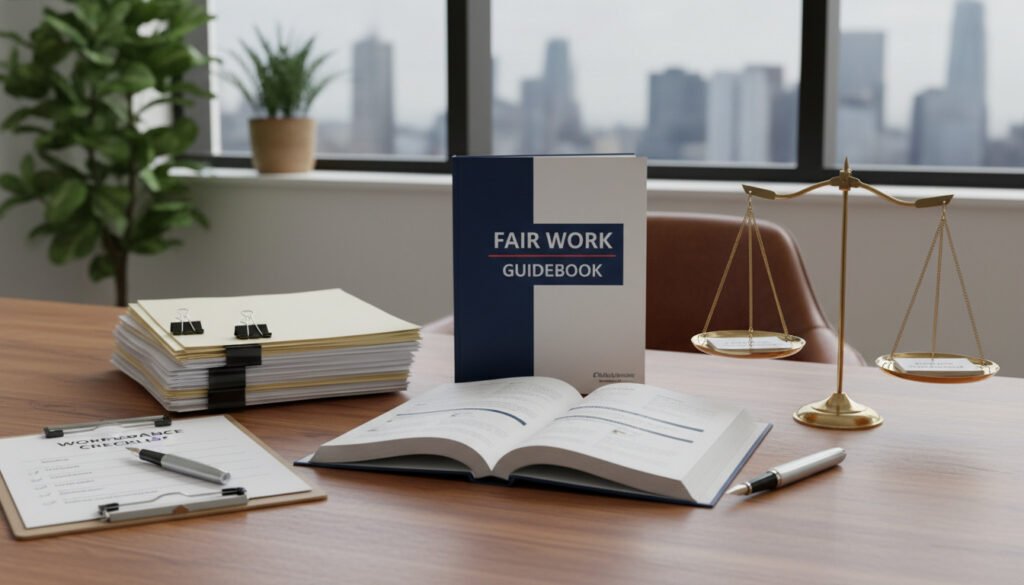
Fair Work Information Statement – Complete Guide for Employers
Every new employee in Australia must receive specific documentation before they begin work or immediately after starting. The Fair Work Information Statement stands as the cornerstone of this requirement, serving as the primary mechanism for informing workers about their fundamental rights under national workplace laws.
Australian employers face strict obligations under the Fair Work Act 2009 to distribute this statement, which outlines everything from minimum wage entitlements to protections against unfair dismissal. Failure to meet these requirements can expose businesses to compliance risks, even as specific penalty amounts remain undefined in public guidance.
This guide examines the statement’s contents, delivery requirements, and special provisions for casual and fixed-term contract workers, drawing directly from Fair Work Ombudsman materials and current legislation.
What is the Fair Work Information Statement?
The Fair Work Information Statement is a mandatory document published by the Fair Work Ombudsman that introduces employees to their workplace rights and entitlements. It functions as a standardized notice required under sections 124 and 125 of the Fair Work Act 2009.
Inform employees of NES, awards, and workplace rights
Fair Work Ombudsman
All new employees nationally
PDF download or digital link
- Mandatory since 2010 under the Fair Work Act 2009
- Covers 11 National Employment Standards including leave and termination
- No custom versions permitted; must use official Ombudsman document
- Digital delivery acceptable via email or intranet links
- Updated periodically to reflect legislative changes
- Universal application with no small business exemptions noted
| Attribute | Detail | Source |
|---|---|---|
| Legislative Basis | Fair Work Act 2009 (Sections 124–125) | Fair Work Ombudsman |
| Issuing Authority | Fair Work Ombudsman | FWO Website |
| Effective Date | 1 January 2010 | Legislation Records |
| Recipient Scope | All new employees (full-time, part-time, casual) | NES Guidelines |
| Content Scope | NES, modern awards, general protections, termination rights | FWO Documentation |
| Update Frequency | As required by legislative amendments | Fair Work Ombudsman |
Who Must Provide the Fair Work Information Statement and When?
Every employer engaging workers under the national workplace relations system must provide the statement. This obligation applies universally, with no exemptions noted for small businesses or specific industries in current guidance.
Employer Responsibilities
The duty to distribute the statement falls on the employer, regardless of business size. The Fair Work Ombudsman mandates that businesses ensure every new hire receives the document before starting or as soon as possible afterward. This requirement integrates with broader compliance obligations under the National Employment Standards.
Delivery Methods and Timing
Employers may deliver the statement through various channels: in person, by mail, via email containing a link to the Fair Work Ombudsman website, through company intranet systems, by fax, or other agreed methods. The critical requirement involves timing—the document must reach the employee prior to commencement or immediately following their start date.
Email distribution remains the most common method, allowing employers to include direct links to the official Fair Work Ombudsman website. However, employers must ensure they use the current version available at the time of provision, checking the website regularly for updates that may affect content.
Does It Apply to Casual or All New Employees?
The requirement extends to all employment classifications, though casual and fixed-term contract workers trigger additional documentation obligations beyond the standard statement.
Casual Employment Information Statement
Casual employees must receive not only the standard Fair Work Information Statement but also the Casual Employment Information Statement. The CEIS explains the definition of casual employment, outlines conversion rights to permanent status, details notification processes, and describes Fair Work Commission dispute resolution procedures. Employers must provide both documents before or as soon as possible after the employee starts, followed by recurring CEIS distributions at specified intervals.
Fixed-Term Contract Requirements
Employees entering fixed-term contracts, including casuals on fixed terms, must receive the Fixed Term Contract Information Statement. This document accompanies the FWIS and CEIS where applicable, ensuring contract workers understand their specific rights and the limitations of their employment arrangement.
The CEIS details pathways for eligible casual employees to convert to permanent employment. Employers must provide this statement at set intervals, including after six and twelve months of employment for some employers, then every twelve months thereafter, to ensure ongoing awareness of conversion rights.
Where to Download and What Are the Compliance Risks?
Accessing the correct documentation requires visiting official government channels, while compliance risks remain significant despite unclear penalty specifications.
Accessing Official Documents
The Fair Work Ombudsman website provides PDF downloads of the FWIS, CEIS, and FTCIS for direct distribution. Employers should verify they are using the most recent version, as the Ombudsman updates these documents to reflect legislative changes, including modifications taking effect through 2025 under ongoing Fair Work Act amendments. For more details on this topic, you can refer to pelvic floor exercises signs and timeline.
Enforcement and Penalties
While the Fair Work Act 2009 establishes the legal requirement for information statements, specific penalty amounts for non-compliance remain unspecified in available guidance. The obligations are enforced by the Fair Work Ombudsman as part of broader National Employment Standards compliance. Employers who fail to provide these statements risk general workplace law violations, though the exact financial penalties for this specific omission are not detailed in public materials.
Employers must use the current version of each statement at the time of provision. Relying on outdated documents, even if downloaded previously, may constitute non-compliance. The Fair Work Ombudsman recommends checking the website regularly for updates, particularly given legislative changes effective from December 2023 through 2025.
How Has the Fair Work Information Statement Changed Over Time?
The legislative framework surrounding employee information statements has developed significantly since the Fair Work Act’s introduction.
- — Parliament passes the Fair Work Act, establishing the framework for National Employment Standards and information statements.
- — The Fair Work Information Statement becomes mandatory for all new employees under the new national workplace relations system.
- — Legislative changes to the Fair Work Act take effect, updating various employment conditions and potentially impacting statement content.
- — The government publishes a review of the ‘small business employer’ definition, though no direct changes to information statement requirements are detailed in this review.
What Is Definite and What Remains Uncertain About Compliance?
Understanding the boundaries of current guidance helps employers navigate their obligations effectively.
| Established Requirements | Uncertain or Undefined Areas |
|---|---|
| All new employees must receive FWIS before or immediately after starting | Specific monetary penalties for failure to provide statements |
| Casual employees require both FWIS and CEIS at commencement | Exact frequency intervals for CEIS distribution beyond initial 6 and 12 months |
| Digital delivery via email or intranet links is acceptable | Whether printed versions in languages other than English satisfy requirements |
| No exemptions exist for small businesses or specific industries | Retroactive compliance remedies for historical omissions |
| Must use current version available at time of provision | Grace periods for providing statements to employees who start urgently |
How Does the Statement Function Within Australian Employment Law?
The Fair Work Information Statement serves as the primary educational tool connecting employees to the National Employment Standards, which establish minimum entitlements including pay, leave, and termination notice that cannot be undercut by awards or agreements. The statement also introduces workers to modern awards, industry-specific instruments that set additional minimum terms regarding hours, rosters, breaks, allowances, and penalty rates.
Beyond individual employment contracts, these information requirements support the Fair Work Ombudsman’s broader enforcement mandate and the Fair Work Commission’s role in dispute resolution. Whether you are managing compliance for a large corporation or a startup preparing for expansion, understanding these documents remains essential. Even those arranging Campervan Hire Melbourne – Best Companies, Prices and Tips for remote work arrangements must ensure their employment documentation meets these national standards.
What Authority Governs These Requirements?
These obligations derive directly from the Fair Work Act 2009, specifically sections 124–125 for the FWIS and sections 125A–125B for the CEIS, supported by regulations 2.01–2.02 and 2.02A.
Employers must give every new employee the Fair Work Information Statement before or as soon as possible after they start employment.
— Fair Work Ombudsman, Fair Work Information Statement Guidelines
The Fair Work Ombudsman issues the official versions of all required statements and maintains current publications reflecting legislative changes taking effect through 2025. A recent review of the small business employer definition published in July 2025 examined related compliance frameworks, though information statement requirements remained consistent.
What Should Employers Prioritize?
Employers should download the current Fair Work Information Statement and Casual Employment Information Statement from the Fair Work Ombudsman website, integrate distribution into standard onboarding workflows, and establish calendar reminders for recurring CEIS obligations for casual staff. Regular monitoring of legislative updates ensures continued compliance as workplace laws evolve through 2025. For financial management aspects of running your business, see the Cash Flow Statement – Complete Guide to Reading and Analysis.
Common Questions About Information Statements
What is the difference between the FWIS and the NES?
The National Employment Standards are the actual legal entitlements (11 minimum standards). The Fair Work Information Statement is the document that explains these entitlements to employees.
Can employers create their own version of the statement?
No. Employers must use the official version published by the Fair Work Ombudsman. Custom versions do not satisfy the legal requirement.
Do part-time employees need to receive the statement?
Yes. All new employees regardless of employment type (full-time, part-time, or casual) must receive the Fair Work Information Statement.
How often must casual employees receive the CEIS?
Casual employees must receive the CEIS at the start of employment, then at specified intervals such as after 6 and 12 months, and subsequently every 12 months.
Are there exemptions for small businesses?
No exemptions are noted in current guidance. All employers must provide these statements regardless of business size.
Can the statement be provided in languages other than English?
While the Fair Work Ombudsman provides translations, employers should verify whether translated versions satisfy specific legal requirements or if the English version is mandatory.
What if an employee refuses to acknowledge receipt?
Employers should document the delivery attempt and method used. The legal obligation is to provide the statement, not necessarily to obtain signed acknowledgment.
More related posts
 Kira Pregiato: Latest Verified Facts and Updates (2025)
 90 Day Fiancé: Couples Still Together, Deaths & Streaming
 Virtual Assistant Jobs – Start With No Experience
 Sesame Street 2026: Status, Streaming, Banned Episodes & FAQs
 Mini Dachshund: Pros, Cons, Care & Prices in Ireland
 Cast of Alien Earth – Full Cast, Roles and Timeline
 Once Upon a Time in America: Guide to a Masterpiece
 Chris Bowen: Children, Wife, Religion, and Political Career