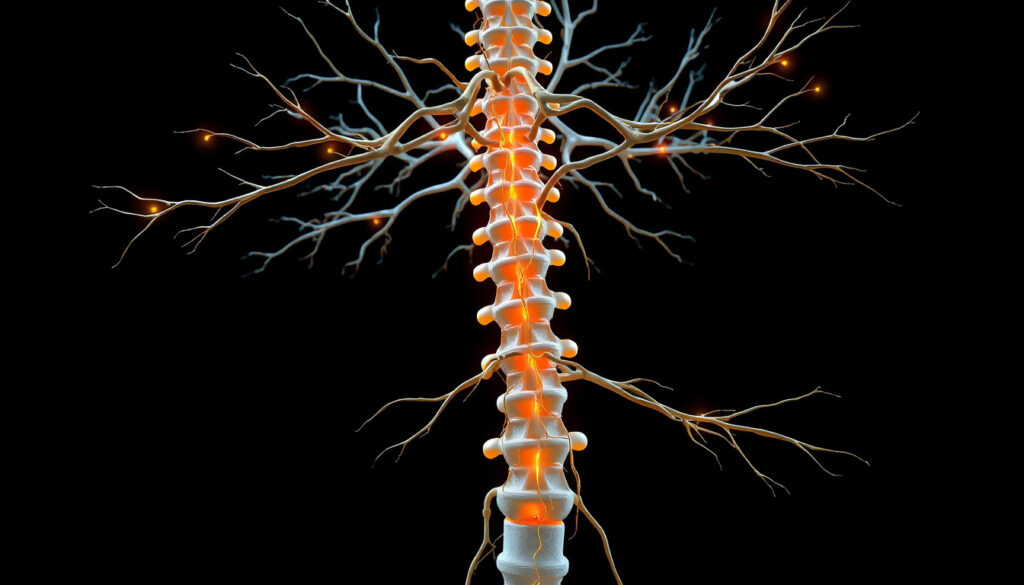
Somatic Nervous System: Function, Anatomy & Differences
Every time you decide to reach for your coffee cup or take a step, a specific part of your nervous system swings into action. The somatic nervous system is what lets you move your muscles on purpose—and it’s surprisingly different from the part that keeps your heart beating without you thinking about it. Knowing how these two systems work separately and together can clarify a lot about why your body does what it does.
Controls: skeletal muscles · Voluntary or Involuntary: voluntary · Part of: peripheral nervous system · Senses Involved: four senses · Key Difference from Autonomic: conscious control
Quick snapshot
- Voluntary control of skeletal muscles (LibreTexts Medicine)
- Part of the peripheral nervous system (Cleveland Clinic)
- Uses single neuron pathway to target muscles (Knya Medical)
- Precise clinical thresholds for dysregulation without formal diagnosis
- Individual variation in somatic response times under fatigue conditions
- Signal transmission occurs rapidly through single-neuron pathway
- Conscious awareness processes motor commands before execution
- Understanding somatic function clarifies how reflexes differ from voluntary movement
- Damage awareness helps recognize when to seek neurological evaluation
| Attribute | Value |
|---|---|
| Also Known As | voluntary nervous system |
| Primary Target | skeletal muscles |
| Sensory Role | somatosensory system |
| Neuron Type | single efferent neuron |
| Examples | walking, lifting |
What does the somatic nervous system do?
The somatic nervous system controls voluntary movements through skeletal muscles and mediates involuntary reflex arcs (LibreTexts Medicine — Anatomy and Physiology). Unlike the autonomic system that runs things behind the scenes, this division puts you in the driver’s seat for deliberate actions.
Role in movement
Somatic motor neurons—also called efferent neurons—are responsible for voluntary movements by communicating directly with muscles, skin, or glands (Study.com). When you decide to walk across the room, raise your hand, or type a message, these neurons carry the command from your brain and spinal cord straight to the target muscle. The pathway is straightforward: one neuron connects the central nervous system to skeletal muscle, making signal transmission rapid compared to autonomic routes (Knya Medical).
Walking, talking, and writing all flow through the same somatic pathway—a single neuron that fires fast because there’s no intermediary relay between your brain’s decision and your muscle’s contraction.
Sensory functions
Sensory neurons, also called afferent neurons, send messages to the brain about external environmental changes such as pain, pressure, and temperature (Study.com). The somatosensory system handles four distinct senses: touch, pressure, temperature, and proprioception—your awareness of where your body parts are in space. This sensory feedback loops back into motor planning, which is why you can adjust your grip on a coffee cup without looking at your hand.
What are the differences between the autonomic and somatic nervous system?
The somatic and autonomic systems are siblings within the peripheral nervous system, but their operating styles differ sharply (Cleveland Clinic). One runs on your awareness; the other runs without you noticing.
Voluntary vs involuntary
Somatic control is conscious and deliberate. You choose to move. Autonomic control is involuntary—it handles heart rate, digestion, respiratory rate, salivation, perspiration, pupillary dilation, urination, and sexual arousal without any conscious input (LibreTexts Medicine). The autonomic system further divides into three parts: the sympathetic nervous system, which triggers fight-or-flight responses during stress; the parasympathetic nervous system, which promotes rest-and-digest functions; and the enteric nervous system, which manages digestion and toxin filtering (Study.com).
The sympathetic and parasympathetic systems work together like a seesaw to balance each other out and maintain homeostasis—keeping body temperature, heart rate, and other biological conditions at optimal levels (Osmosis medical education platform).
Target organs
The somatic nervous system targets skeletal muscles only, while the autonomic nervous system targets cardiac muscle, smooth muscle, and glands (Osmosis). Their pathways differ structurally: somatic uses a single neuron from CNS to muscle, while autonomic uses two neurons (preganglionic and postganglionic), which makes signal transmission slower (Knya Medical). Neurotransmitters also vary—the somatic system primarily uses acetylcholine, while the autonomic system uses both acetylcholine and norepinephrine (Knya Medical).
A comparison clarifies the key distinctions:
| Feature | Somatic | Autonomic |
|---|---|---|
| Control type | Voluntary (conscious) | Involuntary (unconscious) |
| Target tissues | Skeletal muscles only | Cardiac, smooth muscle, glands |
| Neural pathway | Single neuron | Two neurons (preganglionic + postganglionic) |
| Signal speed | Rapid | Relatively slower |
| Neurotransmitters | Acetylcholine | Acetylcholine and norepinephrine |
| Main divisions | One unified system | Sympathetic, parasympathetic, enteric |
| Examples | Walking, writing, talking | Heart rate, digestion, pupil dilation |
What happens if the somatic nervous system is damaged?
Dysfunction in either the somatic or autonomic nervous system can result in a variety of health issues and illnesses (Knya Medical). Damage to somatic pathways typically manifests as loss of muscle control or sensory deficits.
Symptoms
When somatic nerves are compromised, individuals may experience muscle weakness, loss of coordination, diminished reflexes, or numbness in affected areas. The specific symptoms depend on which nerves are damaged and whether the motor or sensory components are affected. Unlike autonomic damage, which might cause irregular heart rate or digestive problems, somatic damage directly impairs voluntary movement and conscious sensation.
Common causes
Peripheral neuropathy, spinal cord injuries, nerve compression, and certain autoimmune conditions can all damage somatic pathways. The location and severity of the injury determines whether recovery is possible and what rehabilitation approaches apply.
Is walking somatic or autonomic?
Walking is a somatic nervous system activity—it’s a voluntary action that involves conscious initiation and control (Knya Medical). While the pattern of stepping becomes automatic once you’ve learned it, the decision to start, stop, or change direction remains under your conscious control.
Walking as somatic activity
The motor cortex sends commands through the somatic pathway—single efferent neurons that directly innervate the skeletal muscles of your legs, hips, and core. This produces rapid, precise contractions that let you navigate stairs, avoid obstacles, and adjust your pace intentionally. The somatic system also manages involuntary reactions like the knee-jerk reflex or pulling your hand from a hot surface, but these are protective arcs, not the same as voluntary gait (Knya Medical).
Related pathways
Both the somatic and autonomic nervous systems are controlled and influenced by higher brain centers, including the cerebral cortex, hypothalamus, and brainstem (Knya Medical). This means emotional states can affect somatic performance—stress increases sympathetic tone, which can make movements feel tighter or more stuttered. Both systems also have plasticity, allowing them to adapt to changing environmental demands and stimuli.
What are the five somatic senses?
The somatosensory system processes four distinct physical senses: touch, pressure, temperature, and proprioception (Osmosis). Some sources list pain as a fifth category, though it overlaps with touch and temperature pathways.
List of senses
Touch registers light contact with skin. Pressure senses deeper force against body surfaces. Temperature distinguishes hot from cold. Proprioception—sometimes called kinesthesia—is your internal map of where limbs are without looking. Together, these inputs let you manipulate objects, maintain balance, and navigate space without constant visual monitoring.
Somatosensory system
Somatic sensory fibers transmit this information from skin and muscle receptors to the central nervous system, where it integrates with motor planning (Osmosis). This feedback loop is why you can hold a fragile object without crushing it—the sensory system continuously adjusts motor output based on real-time input.
The somatic system’s strength—conscious, precise control—comes with a vulnerability: it requires cognitive bandwidth. When you’re mentally fatigued, voluntary movements become slower and less coordinated, unlike autonomic functions that never tire of keeping your blood moving.
Upsides
- Conscious control enables deliberate, precise movement
- Rapid single-neuron pathway allows fast reactions
- Four-sensor feedback system provides rich environmental awareness
- Learned motor patterns can become semi-automatic over time
Downsides
- Requires cognitive attention—cannot operate while mentally fatigued
- Damage directly impairs voluntary function
- Susceptible to peripheral neuropathy and nerve compression
- Reflex arcs provide some protection but cannot replace full control
Related reading: Pelvic Floor Exercise Guide · Coronary Artery Disease Symptoms
The somatic nervous system comprises the voluntary motor and sensory components of the broader peripheral nervous system, enabling actions like walking and touch responses.
Frequently asked questions
How do I know if my nervous system is dysregulated?
Signs of nervous system dysregulation may include unusual fatigue, difficulty with coordination, altered sensation, or changes in muscle control. These symptoms warrant professional evaluation, as they can stem from various causes including somatic or autonomic dysfunction.
What are the top 3 common nervous system disorders?
Common disorders affecting the nervous system include peripheral neuropathy, multiple sclerosis, and motor neuron diseases. Each affects either the somatic, autonomic, or both divisions in different ways.
What is the somatic nervous system pathway?
The somatic pathway consists of a single efferent neuron traveling from the central nervous system directly to skeletal muscle, enabling rapid voluntary movements and reflex responses.
What are somatic nervous system examples?
Walking, talking, writing, reaching, and voluntary reflex responses like pulling your hand from heat are all somatic nervous system functions controlled through conscious motor commands.
Is the somatic nervous system voluntary or involuntary?
The somatic nervous system is voluntary. It operates under conscious control, allowing deliberate actions like moving limbs, speaking, and writing. Its counterpart, the autonomic system, handles involuntary functions like heart rate and digestion.
What is a somatic nervous system diagram?
A somatic nervous system diagram typically shows the single-neuron pathway from CNS through motor neurons to skeletal muscle, often alongside sensory neuron pathways returning from skin and proprioceptors. Medical textbooks and educational platforms like Osmosis and LibreTexts provide detailed anatomical diagrams.
For patients noticing changes in muscle control or sensation, the practical next step is straightforward: track when symptoms appear, note any associated activities or triggers, and consult a neurologist who can run targeted diagnostic tests. Early evaluation catches conditions that worsen without intervention.
More related posts
 BOM Cyclone Tracker: How to Read the Official Map
 Hero Fiennes-Tiffin: Age, Height, Relationships & Nepo Baby
 Dita Von Teese: Burlesque Queen Bio, Career, Personal Life
 Surface Area of a Cylinder: Formula, Steps & GCSE Examples
 Madylin Sweeten Now: Teacher, Mom, and Raymond Star
 Dave Hughes: Health, Sobriety, and Net Worth – Full Biography
 Lara Katseye: Ethnicity, LGBTQ Identity & Biography
 Dash Daniels: Biography, NBA Draft, Stats, Family & More