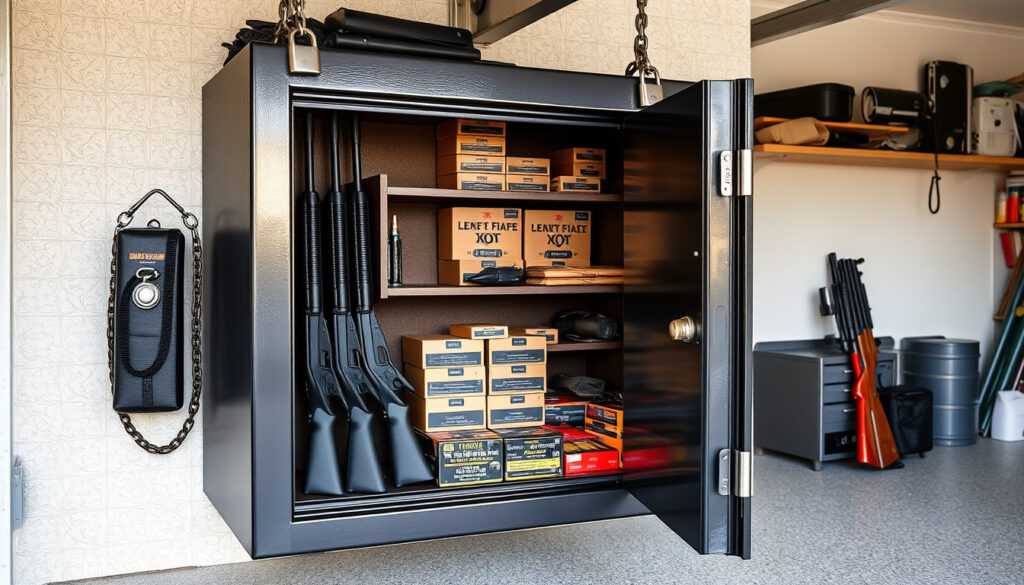
Gun Safe NSW – Legal Firearm Storage Requirements
New South Wales firearm owners face strict legal requirements when it comes to storing their weapons. The NSW Firearms Act 1996 establishes mandatory safe storage standards that apply to all licensed holders, with requirements varying based on firearm category and licence type. Understanding these regulations is essential for compliance and public safety.
Safe storage is not optional guidance but a legal obligation under state law. Failure to meet these standards can result in substantial penalties exceeding $5,500 in fines and up to two years imprisonment. The requirements cover everything from the type of storage equipment permitted to how safes must be installed within premises.
This guide examines what compliant gun safe storage looks like in NSW, the specific requirements by firearm category, where firearms owners can purchase approved equipment, and the consequences of non-compliance. NSW Police and licensed firearms dealers can provide further clarification on approved models and installation specifications.
What Are the Gun Safe Requirements in NSW?
Safe storage requirements in NSW are governed by the Firearms Act 1996 and associated regulations. All firearm owners must take reasonable precautions to ensure firearms are kept safe, not lost or stolen, and do not come into possession of unauthorised persons. These requirements apply regardless of how long a firearm has been in possession or how it is used.
Minimum 600L capacity recommended for longarm storage
Bolt-down to structural elements of premises is mandatory for Category C, D and H
Commissioner-approved key or digital locks accepted
Category A/B storage separate from Category C/D requirements
Storage Levels by Firearm Category
Safe storage levels in NSW are structured according to firearm classification. Understanding which level applies to your licence and firearms is the first step toward compliance. Different categories carry different storage obligations, and owners should consult the NSW Firearms Registry to confirm their specific requirements based on the weapons they hold.
- Category A and B firearms require Level 1 storage standards
- Category C, D and H firearms require Level 2 storage standards
- Collectors, dealers, security firms, prohibited firearms and museums must meet higher levels
- Storage outside inhabited dwellings triggers additional requirements including monitored alarms
Key Facts at a Glance
- All firearms must be stored in Commissioner-approved locked steel safes
- Category C, D and H safes must be bolted to the structure of the premises
- Ammunition must be stored in a separate locked container from firearms
- Collectors must render all firearms inoperable when stored or displayed
- Non-inhabited storage requires off-site monitored alarm systems
- Safe must conform to structural grade 250 mild steel conforming with AS3679 standards
- Regular audits and inspections may be conducted by NSW Police
| Firearm Category | Storage Level | Safe Requirements | Additional Rules |
|---|---|---|---|
| Category A | Level 1 | Locked steel safe | Specific details vary; consult NSW Police |
| Category B | Level 1 | Locked steel safe | Specific details vary; consult NSW Police |
| Category C | Level 2 | Locked steel safe, bolted down | Separate ammunition container required |
| Category D | Level 2 | Locked steel safe, bolted down | Separate ammunition container required |
| Category H | Level 2 | Locked steel safe, bolted down | Separate ammunition container required |
| Collectors | Level 9 | Secure room with safes or display cases | Firearms must be inoperable; physical presence required if displayed |
| Non-inhabited | Enhanced | Approved safe with trigger locks | Off-site monitored alarm systems mandatory |
What Type of Gun Safe Is Required in NSW?
The NSW Police Commissioner must approve all safes used for firearm storage. A safe that fails to meet approved specifications cannot be used regardless of its apparent security features. Understanding the technical requirements helps owners make informed purchasing decisions and avoid equipment that appears secure but does not satisfy regulatory standards.
Material and Construction Standards
For Category C, D and H firearms, safes must conform to specific construction standards. The safe must be manufactured from structural grade 250 mild steel conforming with AS3679 standards and constructed in a manner that prevents easy penetration. Thin metal cabinets marketed as gun safes often do not meet these specifications and cannot be used for higher-category firearms.
Safes must be Commissioner-approved before use. Contact the NSW Firearms Registry for current approved model listings and specific construction requirements.
Installation Requirements
Physical installation matters as much as the safe itself. Category C, D and H licence holders must bolt their safe to the structural elements of the premises. This prevents removal of the entire safe by thieves. The bolts must secure the safe to floor joists, wall studs or concrete foundations capable of withstanding significant force.
For collectors storing firearms in Level 9 conditions, firearms displayed on gun racks must be secured with plastic-coated flexible steel cable of minimum 4mm thickness or equivalent chain. These cables must pass through trigger guards and be secured to walls using expanding bolts or galvanised hexagon head bolts.
Ammunition Storage Rules
Ammunition cannot be stored in the same compartment as firearms under Level 2 requirements. A separate locked container approved by the Commissioner must house all ammunition. This separation reduces the risk of accidental discharge and theft of ready-to-use weapon systems.
Category A and B firearms may share storage space with ammunition under Level 1 requirements. However, Category C, D and H licence holders must maintain strict separation between firearms and ammunition.
Alternative Storage: Non-Inhabited Dwellings
Firearm owners who store weapons in sheds, workshops or other structures not used as dwellings face additional requirements. The NSW Police storage guidelines specify that all firearms stored outside inhabited dwellings must be fitted with trigger or barrel locks preventing discharge.
- Firearms must be secured individually on or in a locked device within the safe
- The safe itself must have an alarm system monitored off-site
- The premises must have an intruder alarm with duress facilities monitored off-site
- Physical security of the building must provide substantial barrier to forced entry
Where Can I Buy a Compliant Gun Safe in NSW and What Does It Cost?
Purchasing decisions should begin with understanding what specifications your storage level requires. The research notes indicate that available documentation does not contain specific information about where to purchase approved safes in NSW or detailed installation costs. Direct consultation with NSW Police or licensed firearms dealers provides the most current purchasing guidance.
Factors Affecting Cost
Several variables influence the price of compliant gun safes in NSW. Construction quality and steel gauge affect both price and compliance eligibility. Certified compliant safes meeting AS3679 structural standards typically command higher prices than standard consumer safes. Size capacity, lock mechanism type and additional security features also contribute to final cost.
Not all products marketed as gun safes meet NSW compliance requirements. Always verify that a safe has received Commissioner approval before purchase. NSW Police can confirm whether specific models appear on the approved list.
Recommended First Steps
Before purchasing, firearm owners should audit their current storage arrangements against the requirements for their licence category. This self-assessment identifies gaps that need addressing. The Shooting Specialists Association of NSW provides guidance on interpreting storage requirements for different licence types.
- Identify your licence category and corresponding storage level requirement
- Review your current safe against Commissioner-approved specifications
- Contact NSW Firearms Registry for approved model information
- Obtain quotes from licensed firearms dealers who stock compliant safes
- Budget for professional installation if bolting requirements apply
What About Minimum Size Requirements?
The available research does not specify minimum dimensions for compliant gun safes in NSW. While the content plan references a suggested 600L minimum for longarm storage, this figure does not appear in official NSW Police documentation. Firearm owners should assess their collection size and ensure adequate capacity for present and reasonably foreseeable future needs.
What Are the Penalties for Improper Gun Storage in NSW?
Non-compliance with safe storage requirements carries serious legal consequences. The NSW Firearms Act 1996 establishes both financial penalties and potential imprisonment for storage violations. These penalties reflect the serious public safety concerns that underpin storage legislation.
Failure to comply with Level 2 safe storage requirements for Category C, D and H firearms is punishable by a fine exceeding $5,500 and/or 2 years imprisonment. These penalties apply to individual offences and can accumulate for multiple violations.
Beyond formal penalties, storage violations can result in licence revocation, seizure of firearms and prohibition from future licensing. NSW Police conduct compliance audits and inspections, particularly following reported thefts or unauthorised access incidents.
The consequences extend beyond the licence holder. Firearms that fall into unauthorised possession due to inadequate storage may be used in criminal activity, potentially exposing the original owner to civil liability or additional criminal charges related to the resulting harm.
Understanding NSW Firearm Storage Regulations Over Time
The current NSW firearm storage framework traces its origins to national firearms reforms following the 1996 Port Arthur tragedy. While state legislation has evolved since the Firearms Act 1996 was enacted, the core principle of mandatory secure storage has remained consistent. Annual amendments have refined requirements without fundamentally altering the compliance obligations facing firearm owners.
Recent legislative references span periods from 2009 through 2026, indicating ongoing review and periodic updates to storage standards. Firearm owners should verify that their storage arrangements meet current requirements rather than relying on older interpretations of the regulations.
- 1996: Firearms Act 1996 establishes initial safe storage requirements across NSW
- 1996-2017: National harmonisation efforts influence state-specific amendments
- 2017 onwards: Periodic updates refine requirements and expand compliance categories
- Current: Storage requirements continue under active regulatory review
What We Know for Certain and What Remains Unclear
Transparency about the boundaries of verified information helps readers understand the reliability of guidance they receive. Several aspects of NSW gun safe requirements are well-documented, while others lack detailed public specification.
Established Information
- Safe storage is mandatory under Firearms Act 1996
- Category C, D and H require Level 2 storage
- Safes must be Commissioner-approved
- Level 2 requires bolting to structural elements
- Ammunition must be stored separately
- Level 2 penalties exceed $5,500 and/or 2 years imprisonment
- Collectors must render firearms inoperable
Information Gaps
- Specific minimum safe dimensions or specifications
- Installation costs for compliant safes
- Where to purchase approved safes in NSW
- Detailed Level 1 requirements for Category A and B
- Current 2025-specific regulatory updates
The lack of publicly available detail on certain specifications reflects the Commissioner’s discretion in approving storage solutions. Individuals should consult directly with NSW Police or licensed firearms dealers for guidance on compliant models, pricing and installation specifications applicable to their circumstances.
Why These Storage Requirements Matter
Firearm storage regulations exist to protect public safety and prevent firearms from reaching criminal hands. Stolen or improperly secured weapons pose significant risks to community safety. The mandatory storage framework in NSW reflects lessons learned from firearm-related incidents and aims to balance legitimate firearm ownership with public protection.
The tiered approach to storage requirements recognises that different firearm types present different risk profiles. Higher-capacity and more dangerous weapons receive correspondingly stricter storage requirements. This graduated approach allows regulatory resources to focus on areas of greatest potential harm while imposing reasonable requirements on lower-risk categories.
Regular compliance audits ensure that storage standards are maintained over time, not just at the point of initial licensing. NSW Police maintain authority to inspect storage arrangements and take action when requirements are not met. This ongoing oversight complements the initial approval process for safe models and installation methods.
Key Sources and Official References
The following official sources provide authoritative guidance on NSW firearm storage requirements. Readers should verify current requirements against these primary sources, as regulations may be updated.
“All firearm owners must take reasonable precautions to ensure firearms are kept safe, not lost or stolen, and do not come into possession of unauthorised persons.”
— NSW Police Safe Storage Guidelines
- NSW Police Safe Storage Requirements
- Firearms Act 1996 (NSW)
- Shooting Specialists Association NSW Storage Guide
For questions about your specific situation, contact the NSW Firearms Registry directly.
The Bottom Line on NSW Gun Safe Requirements
Compliant gun safe storage in NSW is a non-negotiable legal requirement for all firearm licence holders. The specific requirements depend on your firearm category, with Category C, D and H licence holders facing the most stringent standards including mandatory bolting and separate ammunition storage. Failure to comply risks fines exceeding $5,500, imprisonment up to two years, and loss of firearms and licence privileges. Contact NSW Police or licensed firearms dealers to confirm your storage arrangements meet current approved specifications before purchasing new equipment.
Frequently Asked Questions
Do I need a gun safe for firearms in NSW?
Yes. Safe storage is a legal requirement under the Firearms Act 1996 for all licensed firearm owners in NSW. The specific type of safe and installation requirements depend on your firearm category.
Can I use a regular safe for guns in NSW?
Only if it meets Commissioner approval standards. For Category C, D and H firearms, the safe must be manufactured from structural grade 250 mild steel conforming with AS3679 standards and cannot be easily penetrated.
Do gun safes need to be bolted down in NSW?
For Category C, D and H firearms, yes. Level 2 requirements mandate that safes be bolted to the structural elements of the premises. Category A and B requirements vary.
What is the minimum size for a gun safe in NSW?
Available NSW Police documentation does not specify minimum dimensions. The safe should accommodate your collection adequately, including reasonable future needs. Consult the NSW Firearms Registry for clarification.
How much does a compliant gun safe cost in NSW?
Specific pricing information is not available in public documentation. Costs vary based on construction quality, size, lock type and compliance certification. Contact licensed firearms dealers for quotes on approved models.
What are NSW gun safe laws for category A and B firearms?
Category A and B firearms require Level 1 storage standards, which are less stringent than Level 2. While specific detailed requirements are referenced in official documentation, direct consultation with NSW Police provides the most accurate guidance.
Where can I buy a compliant gun safe in NSW?
Licensed firearms dealers throughout NSW stock compliant storage options. Verify Commissioner approval status before purchase. The NSW Firearms Registry can confirm which models meet current requirements.
What happens if my firearms are stolen from inadequate storage?
Beyond storage violation penalties, stolen firearms used in crimes may expose the original owner to additional legal liability. Proper storage protects both your licence status and potentially shields you from liability for subsequent criminal use.
More related posts
 Mission Impossible The Final Reckoning – Release Date, Cast, Trailer Details
 Felix Auger-Aliassime: Parents, Fiancée, Languages & Stats
 Chuck Bass: Catchphrase, Relationships, and Character Guide
 Coke Can: Sizes, Calories, Health Impact & Prices in Ireland
 Thai Food Near Me – Top Thai Restaurants in Worcester
 Time in USA Now: All Zones Live (New York, California, Texas)
 Alessandra Rampolla: Age, Weight Loss, Relationship
 Ginger Spice: Biography, Family, and Cooking Uses