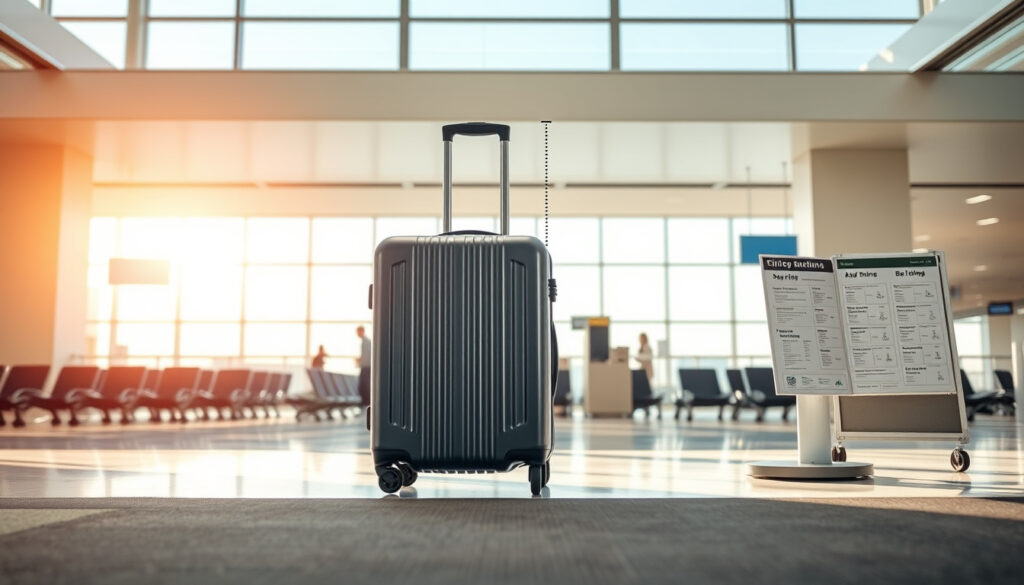
Carry On Luggage – Sizes, Rules and Airline Guide
Navigating airline carry-on policies can feel overwhelming. With dimension limits that vary between carriers and rules that seem to change by the season, travelers often face uncertainty at the gate. This guide breaks down standard carry-on luggage sizes, airline-specific restrictions, and practical strategies to help you pack with confidence and avoid unexpected fees.
Understanding the fundamentals of carry-on dimensions and what you can bring aboard ensures smoother boarding and fewer surprises. Whether you are flying domestically within the United States or catching an international flight, the basics remain remarkably consistent across the industry.
A clear grasp of these policies also helps when comparing travel insurance options or planning multi-modal journeys that include ferry services, such as routes covered in the Isle of Wight Guide.
What Is the Standard Carry-On Luggage Size?
Most U.S. airlines permit carry-on bags up to 22 x 14 x 9 inches (56 x 36 x 23 cm), with wheels and handles included in those measurements. The maximum linear dimension—combining length, width, and height—cannot exceed 45 inches (115 cm). International carriers often impose similar limits, though some permit slightly larger bags like 56 x 45 x 25 cm (22 x 18 x 10 in), depending on the route and aircraft type.
Always measure your bag at home before heading to the airport. Wheels and handles typically add 1-2 inches to the overall dimensions, which can push an otherwise compliant bag over the limit.
At-a-Glance Overview
22 x 14 x 9 inches
18 x 14 x 8 inches
Must fit overhead bin
Airline-specific
Key Insights for Travelers
- Most airlines accept the 22x14x9 inch standard without issue
- Measurements must include wheels and handles
- TSA screens bag contents rather than enforcing size limits
- Budget carriers apply stricter enforcement with real penalties
- Soft-sided bags offer more flexibility than hard-shell designs
- Linear dimension limits often prove more restrictive than individual measurements
- Verify your specific airline before departure, especially for international routes
Airline Carry-On Dimensions Comparison
| Airline | Max Dimensions (in) | Weight Limit | Notes |
|---|---|---|---|
| Delta | 22 x 14 x 9 | None specified | U.S. standard |
| United | 22 x 14 x 9 | None specified | Linear 45 in max |
| Southwest | 24 x 16 x 10 | None | Flexible policy |
| American | 22 x 14 x 9 | None | Standard U.S. |
| Frontier | 24 x 16 x 10 | 35 lb (16 kg) | Weight enforced |
| Spirit | 22 x 18 x 10 | None specified | Depth allowance |
| Ryanair | 21.6 x 15.7 x 7.8 | 22 lb | Strict enforcement |
| Air Canada | 21.5 x 15.5 x 9 | None | International |
What Are Carry-On Size Restrictions for Major Airlines?
Carry-on policies differ significantly between network carriers and budget operators. Major U.S. airlines generally focus on whether a bag fits the overhead bin rather than enforcing strict weight limits. International carriers tend to impose both dimensional and weight restrictions more rigorously.
When evaluating airline policies, consider not just the maximum dimensions but also how strictly those limits are enforced. Some carriers maintain generous tolerance at the gate, while others employ sizers and charge substantial fees for non-compliant bags.
U.S. Major Carriers vs. Budget Airlines
Network carriers like Delta, United, and American typically permit the standard 22x14x9 inch bag with no weight restriction. Southwest stands out by accepting slightly larger bags up to 24x16x10 inches. These airlines generally do not weigh carry-on luggage at the gate, focusing instead on physical fit.
Budget carriers operate differently. Frontier enforces a 35-pound weight limit alongside their 24x16x10 inch dimensions. Spirit allows the same general dimensions but charges $50-100 or more for oversized bags. Ryanair maintains the strictest policies among common carriers: priority passengers receive 55x40x20-25 cm with a 10 kg limit, while non-priority travelers can only bring a smaller underseat bag.
Weight Considerations
Most U.S. airlines do not specify weight limits for carry-on bags. International carriers, however, frequently impose restrictions between 10-15 kg (22-33 lb). International Air Transport Association guidelines provide a framework that many carriers adopt, though enforcement varies considerably.
Even when airlines list weight limits, gate agents rarely weigh bags unless they suspect the item exceeds safe overhead bin capacity. Budget carriers remain the exception, regularly checking both dimensions and weight at the gate.
What Can You Not Put in Carry-On Luggage?
The Transportation Security Administration maintains a comprehensive list of prohibited items for carry-on bags. Sharp objects, weapons, and flammable materials are universally banned. Beyond these obvious categories, certain everyday items require special handling or must be placed in checked luggage.
The 3-1-1 Liquids Rule
Perhaps the most frequently misunderstood regulation involves liquids. The TSA 3-1-1 rule requires all liquids, gels, and aerosols in carry-on bags to meet specific criteria: containers must hold 3.4 ounces (100 ml) or less, all containers must fit within a single 1-quart clear plastic bag, and passengers are limited to one bag per person at the security checkpoint.
The 3-1-1 rule applies to all U.S. domestic and international departures through TSA checkpoints. No changes have been announced for 2025 or 2026. Exceptions exist for medications, baby formula, and breast milk, which may be carried in reasonable quantities with declaration at security.
Food Items and Carry-On Rules
Solid foods are generally permitted in carry-on bags. Fruits, sandwiches, cookies, and similar items present no issues for TSA screening. Liquid or gel-like foods—including soups, yogurt, and sauces—must follow the 3-1-1 rule or be declared and screened separately.
International travelers face additional restrictions. Fresh meat, fruits, and vegetables cannot be brought into the United States or European Union without proper documentation. Travelers should declare all food items at customs and expect inspection of any agricultural products. Airlines permit non-liquid snacks universally, with no noted bans from any carrier.
Restricted Categories
- Sharp objects: knives, scissors with blades over 4 inches, box cutters
- Weapons: firearms, replica weapons, martial arts equipment
- Flammable materials: lighter fluid, matches, flammable aerosols
- Electrical devices: spare lithium batteries must be carry-on only
- Sporting equipment: baseball bats, golf clubs, ski poles
- Liquids over 3.4 oz in non-quart bag containers
Can I Bring a Personal Item with Carry-On Luggage?
Almost all airlines permit two items aboard: a carry-on bag for the overhead bin and a personal item that fits under the seat in front of you. This allowance exists regardless of cabin class on most carriers, though basic economy tickets sometimes restrict this option.
Typical Personal Item Dimensions
Personal items typically include purses, laptop bags, small backpacks, and briefcases. Most U.S. airlines set the maximum at approximately 18 x 14 x 8 inches (45 x 35 x 20 cm). United permits slightly smaller items at 17 x 10 x 9 inches (43 x 25 x 22 cm), while Southwest accepts items up to 18.5 x 8.5 x 13.5 inches. These bags must fit completely beneath the forward seat without requiring force or modification.
The distinction between carry-on and personal item matters at the gate. Passengers carrying only a personal item—without a full carry-on bag—typically board without dimension verification. Those with both items may face bag measurement if overhead bins appear full.
Budget carriers increasingly limit personal item dimensions. Ryanair non-priority passengers receive only an underseat bag (40 x 20 x 25 cm), while Frontier allows just 14 x 18 x 8 inches for the smaller item. Review your carrier’s specific policy before assuming two-item allowance.
Maximizing Your Carry-On Allowance
Travelers seeking maximum packing capacity should consider soft-sided spinner bags measuring 22 x 14 x 9 inches or smaller. Hard-shell bags exceeding 9 inches in depth often trigger gate concerns, particularly on regional aircraft with limited bin space.
One-bag travel enthusiasts recommend consolidating to a single well-organized bag that qualifies as both carry-on and personal item when necessary. This approach provides flexibility when overhead bins fill and gate agents begin checking bag dimensions.
How Strict Are Airlines About Carry-On Sizes?
Enforcement intensity varies dramatically across carriers and even across routes operated by the same airline. Understanding where gate agents draw the line helps travelers prepare appropriately and avoid unnecessary stress at boarding.
U.S. Major Carrier Enforcement
Full-service U.S. airlines generally apply reasonable enforcement. If a bag fits in the overhead bin without forcing or modification, it typically passes inspection. Gate agents may use dimension sizers for unusual cases but rarely check every passenger’s bag during boarding.
Space availability significantly affects enforcement. On full flights with limited bin space, agents become more strict about bag sizes. On less crowded flights, they often relax enforcement since bins can accommodate slightly larger items without difficulty.
Budget Carrier Enforcement
Low-cost carriers enforce dimensions rigorously because bag fees represent significant revenue. Spirit, Frontier, and Ryanair actively measure bags at the gate. Oversized carry-ons may incur fees ranging from $50 to over $100, collected before boarding.
These carriers also conduct random checks even when bins appear available. The fee structure provides incentive for compliance, and many travelers report being charged despite seemingly available overhead space.
What Happens If Your Bag Is Too Big?
When a carry-on exceeds limits, gate agents typically offer two options: gate-checking the bag at no charge (major U.S. carriers) or paying an overweight/oversize fee (budget carriers). Bags exceeding carrier limits may be tagged and placed in the cargo hold, which risks damage and delays if connections are tight.
On domestic U.S. carriers, gate-checking usually occurs at no cost when bins fill. The bag receives a tag and appears at the jetway upon landing. International connections and tight schedules may complicate this, particularly if the next flight operates with different aircraft.
A Timeline of Carry-On Regulations
Carry-on policies have evolved considerably since modern commercial aviation began. Understanding this history provides context for current rules and hints at potential future changes.
- Pre-2001: Airlines permitted larger carry-on bags with minimal enforcement. Standard dimensions often exceeded current limits.
- Post-September 11, 2001: TSA formation brought immediate restrictions on liquids and sharp objects in cabin. Bag size limits became standardized.
- 2006: The 3-1-1 liquids rule emerged following a transatlantic bomb plot. Initial implementation varied; passengers experienced confusion.
- 2013: Standardized 3-1-1 application across all U.S. airports simplified compliance. International adoption followed gradually.
- 2010s: Budget airline expansion led to smaller allowance tiers. Basic economy fares increasingly excluded full carry-on privileges.
- 2020s: Capacity constraints from pandemic recovery increased enforcement frequency. Bin space competition heightened, prompting stricter dimension verification on crowded flights.
What We Know and What Remains Unclear
Established Information
- Universal carry-on dimension: approximately 22x14x9 inches (56x36x23 cm)
- TSA 3-1-1 liquids rule applies to all U.S. departures
- Personal item allowance exists on virtually all carriers
- Budget airlines charge fees for oversized bags
- Linear dimension limits typically cap at 45 inches (115 cm)
Information That Remains Unclear
- Exact enforcement tolerance varies by agent and circumstance
- Weight limits rarely checked on U.S. domestic flights
- Future policy changes depend on fuel costs and carrier economics
- Regional aircraft limitations often undocumented publicly
- Connection impacts on gate-checked luggage vary case-by-case
Why Carry-On Sizes Have Become Standardized
Standardization emerged from practical necessity. Overhead bin dimensions on commercial aircraft vary but generally accommodate bags around 22 inches tall. Bin depth limits width to approximately 14 inches. Seat width determines maximum depth before interference occurs.
Airlines benefit from predictable carry-on dimensions because efficient boarding depends on reasonable overhead space allocation. When passengers bring oversized bags, boarding delays increase and customer satisfaction decreases. Standard limits provide predictability for planning purposes.
Economic considerations also drive uniformity. Travelers planning multi-modal journeys—combining flights with ground transportation—benefit from luggage that transfers easily between modes. This standardization extends beyond airlines to cruise ships, buses, and rental vehicles.
Authoritative Sources on Carry-On Regulations
“All liquids, gels, and aerosols must be in 3.4 ounce containers or smaller. Containers must be placed in a single, clear, quart-sized bag.”
— Transportation Security Administration, FAA Travel Guidelines
The TSA maintains the official What Can I Bring? tool, allowing travelers to search specific items and receive current policy determinations. This resource updates when regulations change, providing the most reliable guidance for packing decisions.
Individual airlines publish their carry-on policies on company websites. Delta and United provide dimension charts alongside specific allowances for basic economy, premium cabins, and frequent flyer tiers. Policy discrepancies between aggregator sites and official airline pages should always resolve in favor of the carrier’s published rules.
Steps for Compliant Carry-On Packing
Preparing a carry-on bag that meets airline requirements involves several straightforward steps. Taking these before departure prevents boarding delays and unexpected fees.
First, verify your airline’s current policy on the carrier’s official website. Document the maximum dimensions and note any weight restrictions. Second, measure your intended bag including wheels and handles. If measurements exceed limits, select a smaller bag or plan for gate-checking. Third, organize liquids according to 3-1-1 requirements: 3.4 oz maximum per container, all containers in one quart clear bag. Fourth, consider a checked luggage guide for items that cannot accompany you in the cabin.
Finally, arrive at the gate early enough to accommodate potential bin space issues. Early boarding passengers secure overhead space; later boarding may require gate-checking even compliant bags.
What is the 3-1-1 liquids rule for carry-on?
The 3-1-1 rule requires all liquids and gels in carry-on bags to be in containers of 3.4 ounces (100 ml) or smaller, packed in a single quart-sized clear plastic bag, with one bag permitted per passenger at the security checkpoint.
How strict are airlines about carry-on sizes?
Major U.S. carriers generally enforce sizes flexibly, focusing on bin fit rather than precise measurement. Budget airlines like Spirit, Frontier, and Ryanair actively measure bags and charge $50-100+ for non-compliance.
Best carry-on luggage for overhead bins
Soft-sided spinner bags measuring 22x14x9 inches fit virtually all U.S. carriers and most international airlines. Avoid rigid bags exceeding 9 inches in depth, as these often trigger gate concerns on regional aircraft.
Can I bring food in carry-on luggage?
Solid foods like sandwiches and snacks are permitted freely. Liquid or gel foods must follow the 3-1-1 rule. Fresh agricultural products face restrictions when entering certain countries.
Is there a difference between domestic and international carry-on rules?
Domestic U.S. flights follow TSA rules. International flights may impose additional restrictions based on destination country requirements. Weight limits appear more frequently on international routes.
What happens if my carry-on is too big?
On major U.S. carriers, oversized bags are typically gate-checked at no charge. Budget carriers may charge $50-100+ for oversized carry-ons. Bags exceeding aircraft limitations require checked baggage placement.
What size backpack is allowed as carry-on?
Backpacks meeting the standard 22x14x9 inch limit function as carry-on bags. Smaller packs typically qualify as personal items if they fit under the seat. Verify your specific airline’s measurements before departure.
More related posts
 Lady Sarah Chatto
 Selwyn Snow Resort Guide for Families and Beginners
 Alicia Keys: Bio, Net Worth, Children, Music, and More
 Gael Monfils: Age, Net Worth, Wife & Career 2025
 Riley Gaines: Biography, Advocacy, and Recent Controversies
 Lara Katseye: Ethnicity, LGBTQ Identity & Biography
 Samantha Ruth Prabhu’s Myositis, Divorce & Diet Change
 Nikolaj Coster-Waldau: Biography, Height, Wife, Languages