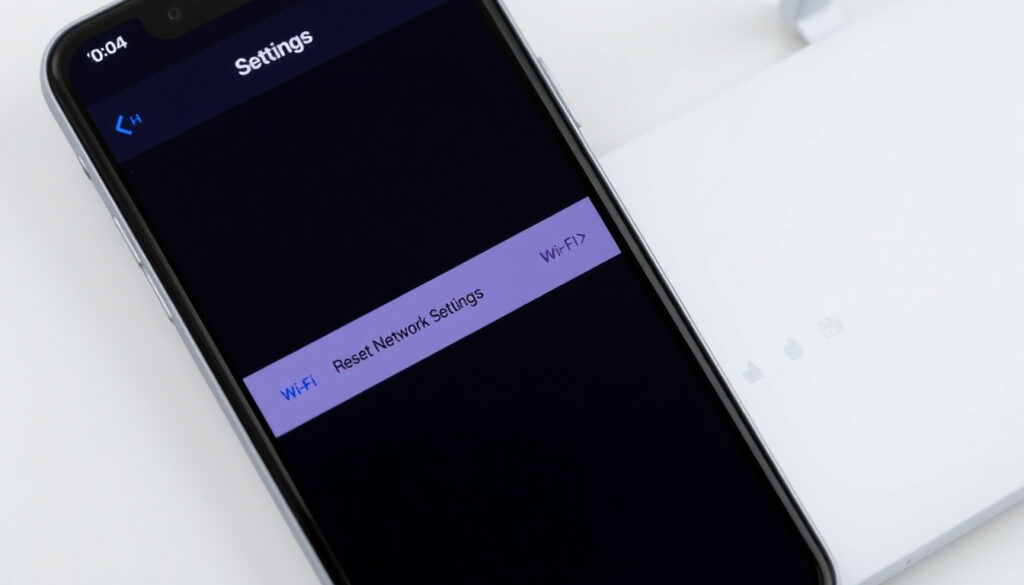
How to Reset Network Settings on iPhone: Step-by-Step Guide
There’s a moment every iPhone owner knows — Wi‑Fi stops connecting, Bluetooth drops, or cellular data goes silent. Before you panic about losing photos or contacts, there’s a targeted fix that won’t touch your personal files. Resetting network settings restores your iPhone’s wireless connections to factory defaults while keeping everything else intact. This guide walks you through exactly what changes, how to do it in under a minute, and when it makes sense to try.
Devices supported: iPhone 6s through iPhone 17, all iOS versions ·
Number of taps required: 4 taps (Settings > General > Transfer or Reset iPhone > Reset > Reset Network Settings) ·
Data lost: Wi‑Fi passwords, Bluetooth pairings, VPN/APN settings ·
Data preserved: Photos, contacts, messages, apps, media files ·
Time to execute: Less than 1 minute ·
iOS versions affected: iOS 15, 16, 17, 18, and later
Quick snapshot
- Restores all network components to factory defaults (Apple Support)
- Affects Wi‑Fi, Bluetooth, cellular, VPN, APN (Apple Support)
- Wi‑Fi won’t connect or drops frequently
- Bluetooth devices fail to pair
- Cellular data not working after update
- VPN or APN settings corrupted
- All photos, videos, music
- Contacts, messages, mail
- Apps and their data
- Settings like brightness, wallpaper
- Saved Wi‑Fi passwords
- Bluetooth pairings
- VPN certificates and APN
- Cellular network preferences
Five key facts, one pattern: network reset is surgical — it targets only connectivity, leaving personal data untouched.
| Fact | Value |
|---|---|
| First introduced in iOS | iOS 2 (early versions) (Apple Support) |
| Latest iOS version supporting | iOS 18 as of 2025 |
| Number of taps to execute | 4 taps (Settings > General > Transfer or Reset > Reset > Reset Network Settings) |
| Average time to complete | 30 seconds to 1 minute |
| Data integrity risk | None for personal files |
What happens if I reset network settings on my iPhone?
Effects on Wi‑Fi, Bluetooth, and cellular settings
- All saved Wi‑Fi networks and their passwords are erased (Apple Support)
- Every Bluetooth pairing is removed
- Cellular settings, including APN and VPN configurations, are reset to defaults
- Manually trusted certificates become untrusted (Apple Support)
- Cellular data roaming may be turned off
- Your device name in Settings > General > About reverts to “iPhone” (Apple Support)
You lose convenience (re‑pairing Bluetooth devices, re‑entering Wi‑Fi passwords) but gain a clean slate for connectivity problems. For most users, the inconvenience is temporary and outweighed by the fix.
What is not affected
- Photos, videos, music, documents
- Contacts, calendar, messages, mail accounts
- Apps and their data (game progress, app settings)
- System settings like brightness, wallpaper, ringtones
- iCloud Keychain and website passwords
- Cellular plan and eSIM profile remain intact (Verizon Support)
The implication: network reset is a precision tool. It doesn’t touch your personal life — only your connections.
How can I reset my network on my iPhone?
Step-by-step instructions
- Open Settings app
- Tap General
- Scroll down and tap Transfer or Reset iPhone
- Tap Reset at the bottom
- Select Reset Network Settings (Apple Support)
- Enter your iPhone passcode if prompted (Bell Support)
- Tap Reset Network Settings again to confirm
- Your iPhone will restart automatically — this takes about 30 seconds (Bell Support)
After the reboot, you won’t be connected to any Wi‑Fi — Apple says Wi‑Fi is turned off and then back on during the reset (Apple Support). You’ll need to re‑enter your home or office network password manually.
Alternative methods (via settings search)
- Swipe down from the middle of the Home screen to open Search
- Type “reset network settings”
- Tap the suggestion that appears — it jumps directly to the Reset menu
- Follow the same confirmation steps above
What this means: whether you tap through menus or search, the result is the same — four taps and a reboot. No Apple ID password is needed for this specific reset.
Will I lose stuff if I reset network settings?
Exactly what is lost
- Every saved Wi‑Fi network name and password (Apple Support)
- All Bluetooth pairings (speakers, headphones, car kits, keyboards)
- VPN configurations (unless installed by a profile or MDM) (Apple Support)
- APN settings (cellular data access point name)
- Manually trusted certificates
- Device name reverted to “iPhone”
Exactly what is preserved
- All photos, videos, music, and documents
- Contacts, calendars, reminders, and notes
- iMessages and SMS history
- Mail accounts and their settings
- All installed apps and their data (game progress, app preferences)
- System settings: wallpaper, brightness, sound, notifications
- iCloud Keychain entries (website logins, credit cards) (Verizon Support)
- Cellular plan and eSIM profile stay active
The most common fear — “will I lose my photos?” — is unfounded. Network reset touches zero user-generated content. The only “loss” is convenience: you’ll need to re‑connect trusted devices.
The trade-off: a few minutes of re‑pairing vs. potentially hours of troubleshooting a persistent network bug. For most iPhone users, the math works.
How to reset network settings on iPhone without losing everything?
Difference between Reset Network Settings and Erase All Content
Choosing the wrong reset option can lead to unnecessary data loss — here’s how they compare.
| Reset Network Settings | Erase All Content and Settings |
|---|---|
| Removes Wi‑Fi passwords, Bluetooth pairings, VPN/APN | Removes everything: all data, settings, apps, media |
| Preserves photos, contacts, messages, apps, accounts | Wipes the entire device — factory fresh state |
| No Apple ID password required | Requires Apple ID password (Find My iPhone lock) |
| iPhone restarts in under 1 minute | Restoration takes much longer, may need iTunes/Finder |
| Intended for network‑only troubleshooting | Used before selling or giving away the phone |
The implication: network reset is safe by design. Apple reorganized the reset menu in iOS 15 to prevent accidental data loss, placing the less‑destructive options first (UPeSIM).
Backup recommendations before reset
- If you want to restore your Wi‑Fi passwords later, do an iCloud or computer backup beforehand — backup restores network settings along with everything else
- If you only care about preserving personal data (photos, contacts), no backup is needed — network reset does not touch those
- To avoid re‑entering Wi‑Fi passwords, note them down or use a password manager (UPeSIM)
What this means: the reset is safe by design — you can proceed without fear of data loss.
Is it a good idea to reset network settings?
When to consider a network reset
- Wi‑Fi connects but drops repeatedly or won’t obtain an IP address
- Bluetooth devices fail to pair or stay connected
- Cellular data stops working after an iOS update
- VPN or APN settings become corrupted
- After restoring from a backup you notice network oddities
Pros and cons
The decision to reset comes down to weighing quick convenience against potential troubleshooting time.
- ✅ Effective for many software‑level network glitches
- ✅ No personal data lost
- ✅ Quick and free
- ❌ You must re‑enter Wi‑Fi passwords and re‑pair Bluetooth devices
- ❌ Not a fix for hardware faults (bad Wi‑Fi chip, broken antenna)
- ❌ Won’t solve carrier network outages or signal dead zones
The implication: network reset is a safe first step in the troubleshooting ladder. If the problem persists after the reset, it’s likely a hardware issue or a carrier problem — not software.
Upsides
- Resolves many Wi‑Fi, Bluetooth, and cellular connectivity issues (YouTube guide)
- No risk to personal data — only network settings are cleared
- Completes in under 1 minute
- Supported by Apple as a standard troubleshooting step (Apple Support)
- Available on all iPhone models from 6s through 17
Downsides
- Must re‑enter all Wi‑Fi passwords
- Bluetooth devices need to be paired again
- VPN and APN settings must be reconfigured
- Device name resets to “iPhone”
- Does not fix hardware or carrier outages
Step-by-Step Guide to Reset Network Settings on iPhone
Main instructions
- Step 1: Open the Settings app on your iPhone
- Step 2: Tap General
- Step 3: Tap Transfer or Reset iPhone (on iOS 15 and later; older iOS: Settings > General > Reset) (UPeSIM)
- Step 4: Tap Reset at the bottom of the screen
- Step 5: Choose Reset Network Settings
- Step 6: Enter your iPhone passcode if required
- Step 7: Tap Reset Network Settings again to confirm
- Step 8: Wait for the iPhone to restart (about 30 seconds) (Bell Support)
- Step 9: After reboot, go to Settings > Wi‑Fi and reconnect to your network
After the reset, verify that Cellular Data is turned on (Settings > Cellular). If you travel, enable Data Roaming separately (UPeSIM). Re‑pair Bluetooth devices one by one.
Alternative: use Airplane Mode as a lighter first step
- Toggle Airplane Mode on for 15–30 seconds, then off (UPeSIM)
- If that doesn’t help, proceed with the full network reset
What this means: network reset is your go‑to when lighter troubleshooting fails. It’s the recommended next step after toggling Airplane Mode or restarting the phone.
Confirmed facts
- Resetting network settings removes Wi‑Fi passwords and Bluetooth pairings (Apple Support)
- Personal data (photos, contacts, apps) is not deleted
- The reset can be performed on any iPhone running iOS 15 or later
- Apple support recommends network reset as a standard troubleshooting step
- Network reset does not affect eSIM or cellular plan (Verizon Support)
What’s unclear
- Whether network reset will fix every Wi‑Fi issue — depends on the root cause (hardware vs. software)
- Exact percentage of users who resolve problems via this reset — no official statistic exists
“Tap Reset Network Settings. This resets all Wi‑Fi networks and passwords, cellular settings, and VPN and APN settings.”
— Apple Support (official iPhone documentation)
“Navigate: General > Transfer or Reset iPhone > Reset > Reset Network Settings.”
— Verizon Support (U.S. carrier network guide)
Resetting network settings is one of the most effective first‑line troubleshooting steps for iPhone connectivity issues — it’s safe, fast, and leaves your personal life untouched. The trade‑off is a few minutes of re‑entering passwords and re‑pairing devices. For iPhone users facing persistent Wi‑Fi drops, Bluetooth hiccups, or cellular data failures after an iOS update, the choice is clear: try network reset before scheduling a Genius Bar appointment.
For a more comprehensive walkthrough, you can refer to this detailed guide on resetting network settings that also covers data safety.
Frequently asked questions
Does resetting network settings delete eSIM?
No. eSIM profiles are stored independently and are not affected by a network settings reset (Verizon Support).
How often should I reset network settings?
Only when you’re experiencing network problems. There’s no benefit to resetting proactively. For most users, once every year or two is plenty.
Will resetting network settings improve cellular signal?
It can help if the issue is a corrupted APN or cellular data setting, but it won’t fix weak signal caused by distance from towers or building materials.
Do I need to backup before resetting network settings?
Not for personal data — network reset won’t delete your photos or contacts. However, if you want to preserve your Wi‑Fi passwords, backup first or note them down.
What is the difference between reset network settings and reset all settings?
Reset Network Settings only affects Wi‑Fi, Bluetooth, cellular, VPN, and APN. Reset All Settings returns all system settings (display, sounds, privacy, etc.) to defaults without deleting personal data.
Can I undo a network settings reset?
No — there’s no undo. You must re‑enter your Wi‑Fi passwords and re‑pair Bluetooth devices manually. That’s why it’s helpful to note down passwords before proceeding.
Does network reset affect Apple Pay or Face ID?
No. Apple Pay cards and Face ID settings are stored in the Secure Enclave and are not touched by network reset.
More related posts
 Emily Bett Rickards: Biography, Age, Height, Arrow Exit
 LSG vs DC 2026: Rizvi’s 70* Powers DC to Comeback Win
 16 Guard Haircut – Exact Length, Looks and How-To Guide
 Cosmic Kylie Jenner – Notes, Longevity and Full Review
 Sesame Street 2026: Status, Streaming, Banned Episodes & FAQs
 Shop on Temu in Ireland: Guide to Safety, Steps & Deals
 How Old Is Sam Kerr? Age 32, Career & Personal Life
 Stassi Schroeder: From Vanderpump Rules to Family Life