Best 50 Inch TV Guide: Reliability, Lifespan & Value
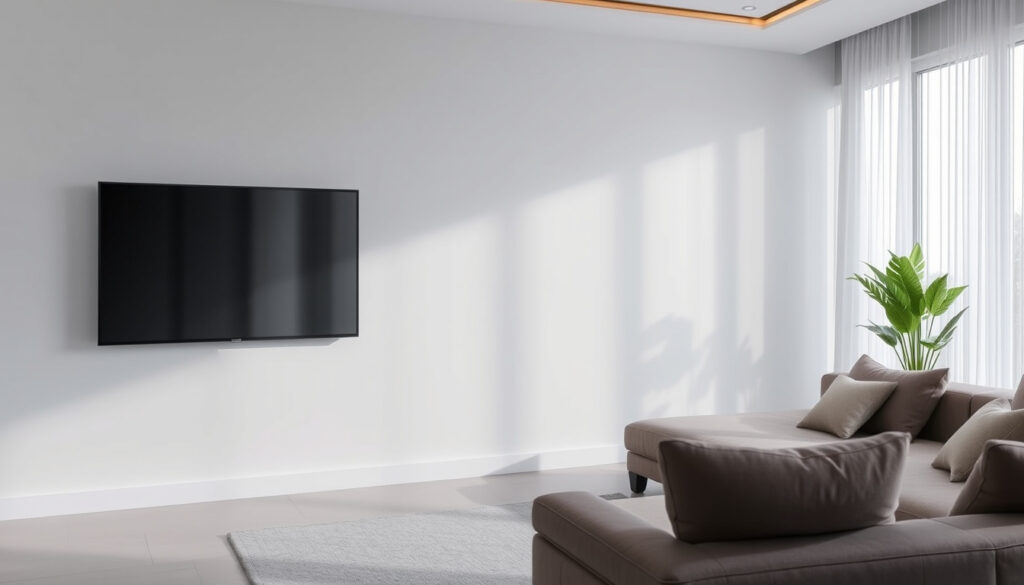
A 50-inch TV has become the Goldilocks size for many living rooms—big enough for an immersive movie night, yet compact enough to fit most entertainment centers without overwhelming the space. Consumer Reports consistently ranks Sony, Samsung, and LG as the most reliable brands in this category, with typical lifespans of 5–7 years under normal use. This guide cuts through the marketing noise to help you choose a 50-inch TV that actually lasts, fits your room, and delivers the best picture for your budget—whether you’re shopping for a dark home theater or a bright family room.
Average lifespan of a 50-inch TV: 5 to 10 years ·
Most reliable TV brand: Sony ·
Best value 50-inch TV model: Hisense U6K ·
Typical price range: $300–$800 ·
Ideal viewing distance: 6 to 9 feet ·
Resolution standard for 50-inch TVs: 4K (3840 × 2160)
Quick snapshot
- 50-inch TVs are the most popular size for average living rooms (RTINGS)
- Sony, Samsung, and LG consistently rank as the most reliable TV brands (Consumer Reports)
- Exact failure rates for specific 2024/2025 models are not yet widely published (Business Insider)
- Lifespan can vary significantly depending on usage and environment (Consumer Reports)
- No major technology shifts in 2025; 2024 models remain available and often discounted (Business Insider)
- Buyers should focus on panel type (OLED vs QLED vs LED) and HDMI 2.1 support for future-proofing (The Good Guys)
Six key specifications that define a modern 50-inch TV, one pattern: panel technology and connectivity are where you get the biggest picture-quality difference for your money.
| Specification | Typical Value |
|---|---|
| Screen size (diagonal) | 50 inches (127 cm) |
| Resolution | 4K (3840 × 2160) – standard for 50-inch models |
| Average price range | $300 – $800 |
| Typical weight (without stand) | 25–35 lbs (11–16 kg) |
| Ideal room size | Seating distance of 6–9 feet (1.8–2.7 m) |
| Power consumption | 100–150 watts (average usage) |
The five models that dominate 50-inch recommendations, one pattern: each targets a different priority—price, brightness, or gaming features.
| Model | Panel Type | Key Strengths | Price Range | Source |
|---|---|---|---|---|
| Hisense U6K | QLED | Great contrast, Dolby Vision, under $400 | $300–$400 | RTINGS |
| Sony X80K | LED | Excellent upscaling, 5-year lifespan, reliable brand | $500–$700 | Consumer Reports |
| Samsung Q60B | QLED | Low input lag, HDMI 2.1, VRR support for gaming | $400–$600 | Business Insider |
| TCL QM5K | Mini‑LED | Best budget 50-inch, bright panel, good HDR | $350–$450 | RTINGS |
| Amazon Omni QLED | QLED | Often below $400, local dimming, 500 nits peak | $350–$450 | Business Insider |
Six specifications that define a typical 50-inch TV, one pattern: the panel technology and refresh rate make the biggest real-world difference for most buyers.
| Specification | Common Value |
|---|---|
| Resolution | 4K (3840 × 2160) |
| Refresh Rate | 60Hz (most models); 120Hz on gaming‑focused sets |
| HDR Support | Dolby Vision, HDR10, HLG |
| HDMI 2.1 | Included on mid‑range and above |
| Variable Refresh Rate (VRR) | Available on Samsung Q60B and similar gaming models |
| Sound Output | 20W–30W typical (external soundbar recommended) |
| Smart Platform | Tizen (Samsung), WebOS (LG), Google TV (Sony/Hisense), Fire TV (Amazon) |
| Wall Mount Pattern | VESA 200×200 mm or 300×300 mm |
| Input Lag (Game Mode) | < 10ms on premium models |
| Peak Brightness | 300–500 nits typical; up to 1000 nits on high‑end OLED |
What’s the best 50 inch TV for the money?
The best value 50-inch TV balances price, picture quality, and long-term reliability. According to RTINGS (TV review specialist), the Samsung QN90F tops its 48–50 inch guide as the best overall model, while the TCL QM5K earns the best budget pick. For strict budgets, the Hisense 50QD6QF is listed as the best smart TV value.
Top budget-friendly 50-inch TVs
- TCL QM5K – Mini‑LED panel, good brightness, under $400 according to RTINGS.
- Hisense U6K – QLED with Dolby Vision, often below $400, strong contrast per RTINGS.
- Amazon Omni QLED – Local dimming, 500 nits peak brightness, often drops below $400 according to Business Insider.
What to avoid when buying a new TV?
Skip models without HDMI 2.1 if you game at 4K 120Hz. Avoid very cheap LED sets with narrow viewing angles if you watch from the side. Don’t ignore the panel type: standard LED often lacks the contrast and color of QLED or OLED. The Good Guys (electronics retailer) also warns against buying based solely on price without checking HDR and gaming features.
Hisense and TCL offer the best raw specs per dollar, but their reliability scores trail Sony and Samsung. If you plan to keep the TV for 7+ years, spending more on a Sony X80K may save you a replacement cycle.
The pattern is clear: the best value depends on whether you prioritize upfront cost or long-term reliability.
Which 50 inch TV is good?
“Good” depends on your budget and primary use―movies, gaming, or bright-room viewing. Consumer Reports (nonprofit testing organization) includes Hisense, LG, Samsung, Sony, and TCL in its 2026 best-TVs list, confirming that all major brands have competitive models in the 50-inch class.
Best 50-inch TVs for different budgets
- Under $400: Hisense U6K or TCL QM5K (both QLED/Mini‑LED, 4K HDR).
- $400–$600: Samsung Q60B (QLED, HDMI 2.1, low input lag for gaming).
- $600–$800: Sony X80K (LED, proven reliability, excellent upscaling).
Which is better, 4K or QLED?
4K refers to resolution (3840 × 2160), while QLED is a panel technology that uses quantum dots for brighter, more colorful images. Nearly all 50-inch TVs sold today are 4K; the real choice is between LED, QLED, and OLED. QLED is better for bright rooms and gaming due to higher peak brightness and no burn‑in risk, while OLED offers deeper blacks and superior contrast for dark‑room cinema. Business Insider (consumer tech guide) notes that the LG C5 OLED delivers “stunning contrast” but is dimmer than larger OLED models and more expensive than QLED alternatives.
If your living room has a lot of windows, a QLED TV like the Samsung Q60B will maintain picture pop during the day. For a dedicated home theater, an OLED like the LG C5 crushes the competition on black levels―but expect to pay $200–$400 more.
The takeaway: panel type and budget should drive your decision, with QLED suiting bright rooms and OLED suiting dark rooms.
What TV brand is most reliable?
Reliability is the number-one factor for a long‑term TV investment. Consumer Reports (independent product testing lab) consistently places Sony, Samsung, and LG at the top of its brand reliability rankings. Hisense and TCL offer strong mid‑range performance but have slightly higher failure rates in long‑term surveys.
Brand reliability ratings and consumer reports
- Sony: Top‑tier reliability, excellent image processing, typical lifespan 5–7 years.
- Samsung: Very reliable, wide range of panel types, 5–8 years typical.
- LG: Strong reliability, OLED market leader, 5–7 years for LED models.
- Hisense: Good value, failure rates slightly above Sony/Samsung, 4–6 years typical.
- TCL: Budget leader, reliability improving but still behind top brands, 4–6 years.
Which TV brand has the fewest problems?
According to Consumer Reports, Sony models have the lowest reported repair rate over the first five years of ownership. Samsung and LG are close behind. The gap between premium and budget brands has narrowed, but for maximum peace of mind, Sony remains the safest bet.
Sony buyers pay a 15–25% premium over equivalent Hisense or TCL models, but gain around 1–2 extra years of problem‑free use. For a TV you’ll keep for a decade, that premium often pays for itself.
The implication: paying more for a Sony or Samsung can reduce the risk of early failure.
Which TV size is better, 50 or 55?
Size choice depends on your room dimensions and viewing distance. The Good Guys (Australian electronics retailer) recommends starting with viewing distance before deciding screen size: for a 4K TV, they suggest sitting about 1.5 to 2.5 times the screen height away.
How to choose the right TV size for your room
- Viewing distance 5–7 feet (1.5–2.1 m): A 50-inch TV is ideal. The pixels are tight enough for a sharp 4K picture.
- Viewing distance 7–9 feet (2.1–2.7 m): Both 50 and 55 inches work well. A 55-inch fills more of your field of view without looking pixelated.
- Viewing distance over 9 feet: 55-inch or larger is recommended; 50-inch will feel small.
Viewing distance and resolution for 50-inch vs 55-inch
Pixel density is slightly higher on a 50-inch 4K screen (~88 PPI) than on a 55-inch (~80 PPI), but the difference is barely noticeable from a normal seating distance. The trade‑off is that the 55-inch gives a more cinematic experience in larger rooms. RTINGS notes that the best 50‑inch models (like the Samsung QN90F) are highly competitive with their 55‑inch siblings, often at a lower price.
The verdict: room dimensions should be the primary factor in size selection.
What’s the average lifespan of a 50-inch TV?
The lifespan of a 50-inch TV depends on panel technology and usage. Business Insider (consumer technology resource) reports that LED TVs average 5–7 years, QLED panels 7–10 years, and OLED models 5–7 years under normal household use.
How long does a Samsung 50 inch TV last?
Samsung’s 50-inch models, which use QLED and LED panels, typically last 5–8 years according to Consumer Reports. Heavy daily use, high brightness settings, and poor ventilation can shorten that to 4–5 years.
Factors that affect TV longevity
- Brightness level: Running at max brightness accelerates LED wear. Lowering it by 20–30% can add years.
- Hours of use: A TV on 12 hours a day will wear out twice as fast as one used 6 hours.
- Ventilation: Heat is the enemy. Ensure at least 2 inches of clearance around vents.
- Panel type: QLED and OLED are generally more robust than standard LED in terms of color retention.
- Power quality: Voltage surges can damage power boards. A surge protector is a cheap insurance policy.
OLED screens are susceptible to burn‑in if static images are displayed for hours daily (e.g., news channels with persistent logos). For heavy news viewers, a QLED or LED model is the safer long‑term choice.
The pattern: panel technology and usage habits are the biggest determinants of longevity.
Confirmed facts
- 50-inch TVs are the most popular size for average living rooms (RTINGS)
- Sony, Samsung, and LG consistently rank as the most reliable TV brands (Consumer Reports)
- 4K resolution is now standard on nearly all 50-inch TVs (Business Insider)
What’s unclear
- Exact failure rates for specific 2024/2025 models are not yet widely published (Consumer Reports)
- Lifespan can vary significantly depending on usage and environment (Business Insider)
“Sony continues to top our brand reliability charts with the fewest repair reports over the first five years of ownership.”
— Consumer Reports (nonprofit testing organization)
“The LG C5 OLED delivers stunning contrast and perfect blacks—but it’s dimmer than larger OLED models and carries a premium price that may not suit every budget.”
— Business Insider (consumer technology guide)
“Start by measuring your viewing distance. That will determine the right screen size before you even think about panel type or brand.”
— The Good Guys (Australian electronics retailer)
The 50-inch TV market is crowded, but the choices are clear once you separate hype from hardware. For most households, buying a reliable Sony or Samsung QLED model will deliver the longest, most satisfying ownership experience. If your budget is tighter, Hisense and TCL offer fantastic value—just factor in a slightly shorter expected lifespan. Before you buy, measure your room, check your viewing distance, and verify HDMI 2.1 support if gaming matters. JB Hi-Fi TV buying tips and reliable brands can help you compare local options. For Australian buyers, the decision is simple: prioritize Sony for longevity, Hisense for value, and Samsung for gaming—and always confirm the warranty length before you click buy.
Related reading: **Cars with best sound systems**
businessinsider.com, rtings.com, youtube.com, thegoodguys.com.au
For a more detailed guide to 50 inch TVs that includes 2026 model reviews and pricing, see detailed guide to 50 inch TVs.
Frequently asked questions
Is a 50-inch TV good for a bedroom?
Yes. A 50-inch TV fits comfortably on a dresser or wall mount in most bedrooms. For a viewing distance of 6–8 feet, it provides an immersive but not overwhelming screen size. A 43-inch can work too, but 50 inches gives you a more cinematic feel.
Do 50-inch TVs support HDMI 2.1?
Many newer 50-inch models, especially from Samsung and LG, include at least one HDMI 2.1 port. This is essential for 4K gaming at 120Hz. Always check the specs before buying if you plan to connect a PS5, Xbox Series X, or high‑end PC.
What is the cheapest 50-inch TV?
Brands like Hisense, TCL, and Amazon frequently offer 50-inch 4K models under $350. The TCL QM5K and Hisense U6K are often the lowest‑priced while still delivering good picture quality and HDR support.
How much does a 50-inch TV weigh?
Most 50-inch TVs weigh between 25 and 35 pounds (11–16 kg) without the stand. This makes them manageable for one person to mount, though a helper is recommended for safety.
Can I mount a 50-inch TV on the wall?
Yes. Almost all 50-inch TVs have a VESA mount pattern (typically 200×200 mm or 300×300 mm). You’ll need a compatible wall mount and to check that your wall can support the weight.
What is the refresh rate of most 50-inch TVs?
Standard 50-inch TVs have a 60Hz refresh rate, sufficient for movies and TV shows. Gaming‑focused models (like the Samsung Q60B) offer 120Hz panels with variable refresh rate support for smoother gameplay.
Are 50-inch TVs 4K?
Yes, nearly all 50-inch TVs sold today are 4K (3840 × 2160 pixels). 1080p models are becoming very rare and are usually limited to the lowest‑end or second‑hand markets.
More related posts
 Chris Kohler: Finance Editor, Author, and Son of Alan Kohler
 Dignity of Risk: Meaning, Examples, and Principles
 Osmo Pocket 4 – Specs, Hands-On Impressions, Release Details
 Alan Carr: Divorce, New Partner, Net Worth & TV Career
 Portia de Rossi: Marriage, Career Changes, and Appearance Rumors
 Benji Madden: Wife, Kids, Age, Net Worth & Biography
 Kathy Hilton Net Worth vs Kyle, Lisa, and Kris Jenner
 Mark Knopfler: Health, Legacy & Guitar Legend Guide